PNW Voters Weigh Record Spending in Midterm Battle
With polls open across the Pacific Northwest, the region watches as a record-breaking war chest shapes the fight for control of Congress.
By Rebecca Foster ·
Voters across the Pacific Northwest are heading to the polls on Tuesday to decide who will control Congress for the final two years of President Donald Trump's second term. In Washington, polls close at 8 p.m. local time, while Oregon and Idaho also end voting at the same hour. Alaska voters have until 8 p.m. to cast their ballots, and Hawaii closes its polls at 7 p.m. The Associated Press describes the election as a referendum on the president's performance, with many citizens expressing frustration over high prices and an unpopular war with Iran.
The financial scale of this midterm election has reached historic levels, likely making it the most expensive in history. Republican committees have outraised and outspent their Democratic counterparts at the committee level. This advantage has been significantly boosted by contributions from Trump-affiliated groups and Elon Musk. However, at the candidate level, Democrats have managed to outraise their opponents, creating a complex financial landscape that is influencing campaign strategies across the region.
An analysis by the Associated Press of AdImpact data reveals that 88.1 percent of Republican general election television ad spending has gone to states and districts where Trump won in 2024. More than 850 million dollars was spent in areas where he won by ten points or more. This heavy concentration of funds reflects a strategy to fortify Republican holds in safe territories while also contesting key battlegrounds. The disparity in spending has raised questions among political observers about the efficiency of campaign resources in closely contested districts.
In the Pacific Northwest, the stakes are high for both parties. Oregon is holding an open seat for the U.S. Senate, and voters are also deciding the open governorship. Idaho is defending incumbent U.S. Senator Jim Risch and incumbent Governor Brad Little. Alaska is defending U.S. Senator Dan S. Sullivan and has an open governorship race. Washington state does not have a Senate or governor race on the ballot this year, but its voters are still deciding the fate of all 435 U.S. House seats and 36 governorships nationwide.
RNC Chairman Joe Gruters stated that everything depends on turnout, asserting that if they turn out their voters, they win. He emphasized that this was what they had been planning for. In contrast, DCCC Chair Rep. Suzan DelBene said the American people are angry and want change. These quotes capture the divergent moods of the two parties as they compete for the loyalty of independent voters in the region. Both parties are urging supporters to vote, knowing that the margin of victory in key states could be narrow.
The mood among voters in the Pacific Northwest is shaped by economic concerns. Polling from the AP and NORC shows that 35 percent of U.S. adults approve of Trump's job performance, while only 25 percent approve of his handling of the economy. About seven in 10 say the country is heading in the wrong direction. Many voters in the region, like those in other parts of the country, are blaming the president for high prices. This economic anxiety is a central theme in the debates and advertisements filling the airwaves in cities like Seattle, Portland, and Boise.
More than 57 million people had already voted as of Monday, surpassing the early vote of four years ago in many closely watched states. In the Pacific Northwest, where mail-in voting is prevalent in states like Oregon and Washington, a significant portion of the electorate has already cast their ballots. The U.S. Postal Service added hours, staff, and special lines to ensure that mail ballots are counted on time. This logistical effort is crucial for the accuracy and timeliness of the results in these states.
Republicans are bracing to lose the House and are fighting to hold the Senate. The Associated Press notes that one or two seats could tip either chamber. Democrats are described as cautiously optimistic. In the Pacific Northwest, the region's three electoral votes in the Senate race for Oregon could be pivotal. The open seat in Oregon is considered a battleground, and the outcome could influence the balance of power in the upper chamber. The race in Alaska, where the Trump administration filed a lawsuit related to certification of the Senate result, adds another layer of complexity to the regional dynamics.
The new congressional maps in six states, including California, will also play a role in determining the outcome. Ohio also uses a new map. These redistricting efforts were part of a strategy by Republicans to beat the midterm pattern, where a president's party almost always loses seats. However, new districts in Florida and elsewhere may not vote as drawn. In the Pacific Northwest, the impact of redistricting is less pronounced, but the overall national context influences local campaign strategies and voter engagement.
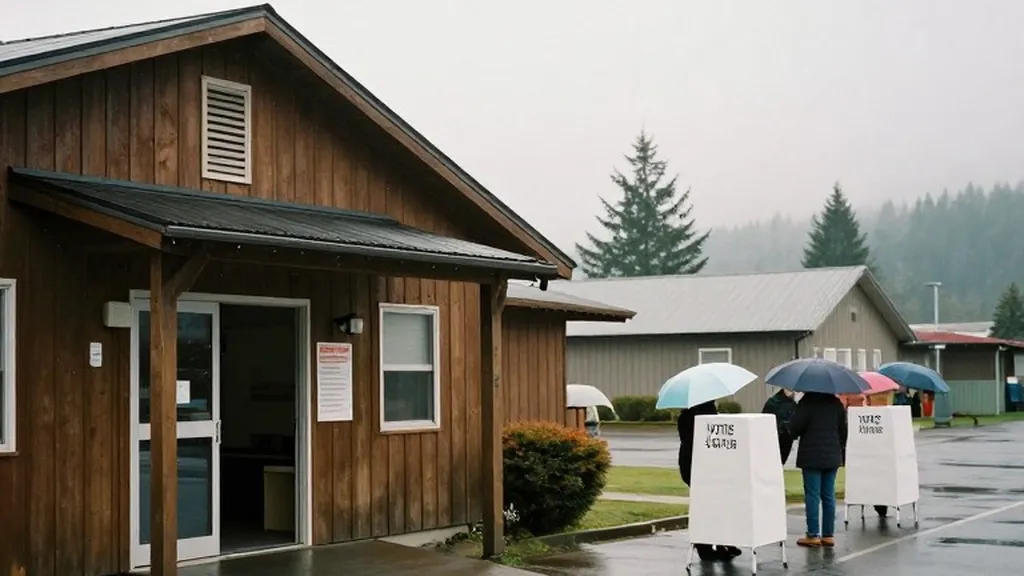
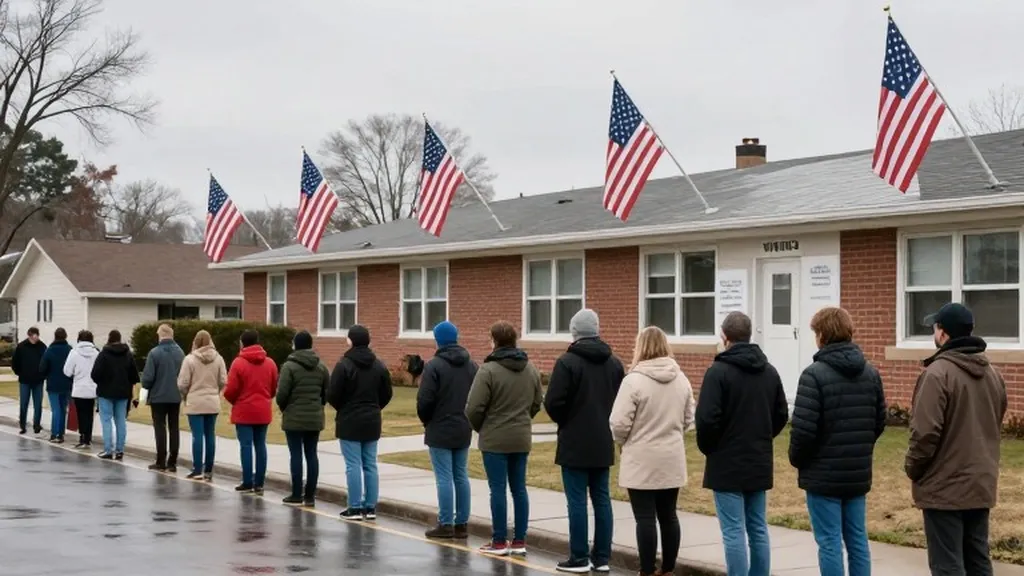
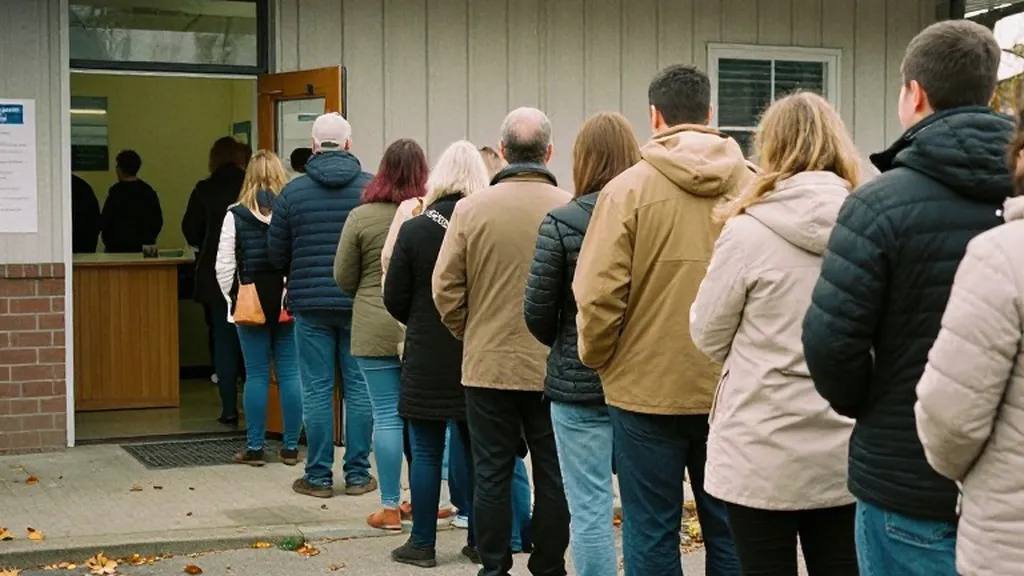
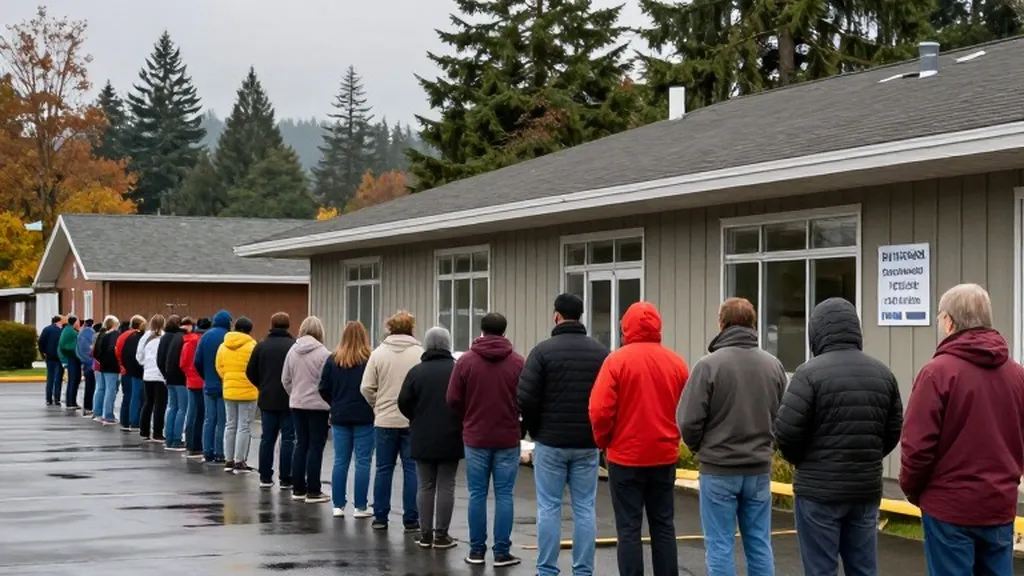
As polls open in the morning, voters in the Pacific Northwest are casting their ballots in various settings. In Idaho, polls open at 8 a.m., while in Oregon and Washington, the timing varies by local rules. The weather in the region is mild, with clear skies in parts of Washington and Oregon, and cooler temperatures in higher elevations. The scene is one of orderly participation, with lines forming at polling places and mail ballots being processed. The financial investment in this election is evident in the density of advertising and the intensity of the campaign efforts.
The outcome of this election will have significant implications for the balance of power in Washington. If Democrats win even one chamber, investigations and possible impeachment proceedings become likely. House Democratic Leader Hakeem Jeffries would be the first Black speaker and has outlined a 100-day agenda on the cost of living and oversight. A strong Democratic night would also boost potential 2028 candidates, including Gavin Newsom, JB Pritzker, and Pete Buttigieg. For Republicans, a victory would solidify their control over the legislative agenda for the remainder of Trump's term.