Midterm math: House control hinges on 46 tight races
With polls open across the Pacific Northwest, Democrats need a net gain of three seats to take the House while Republicans face new district maps in seven states.
By Matthew Qureshi ·
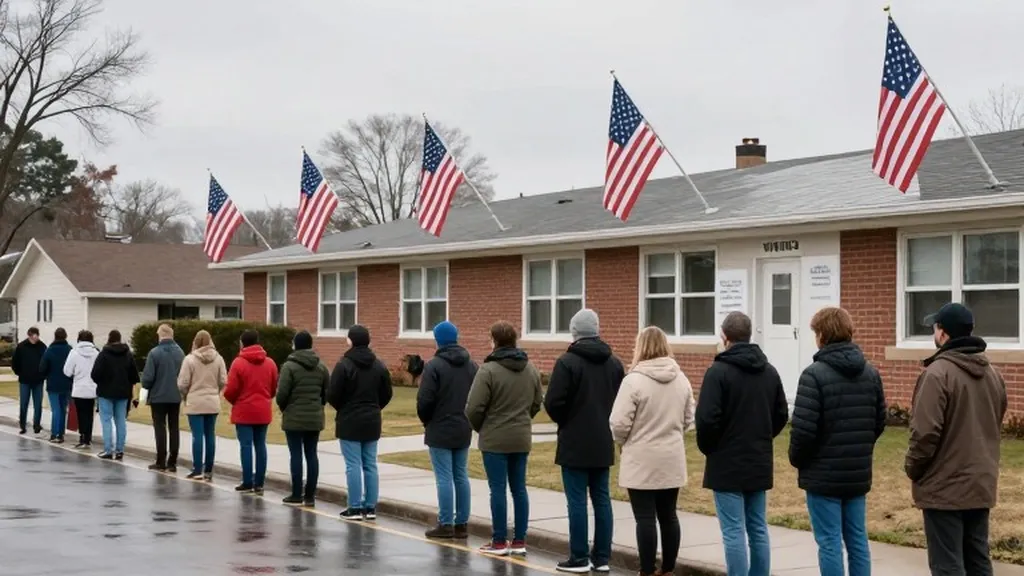
Voters across the United States are casting ballots on Tuesday, November 3, 2026, to decide the balance of power in the U.S. House of Representatives. All 435 seats are up for election in this midterm contest, which takes place halfway through President Donald Trump's second term. The outcome will determine which party controls the chamber for the final two years of the administration. Republicans currently hold 218 seats, Democrats hold 214, and there is one independent seat, with additional vacancies to fill. Democrats require a net gain of three districts to secure a majority, while Republicans can afford to lose no more than two seats to maintain their hold on the chamber.
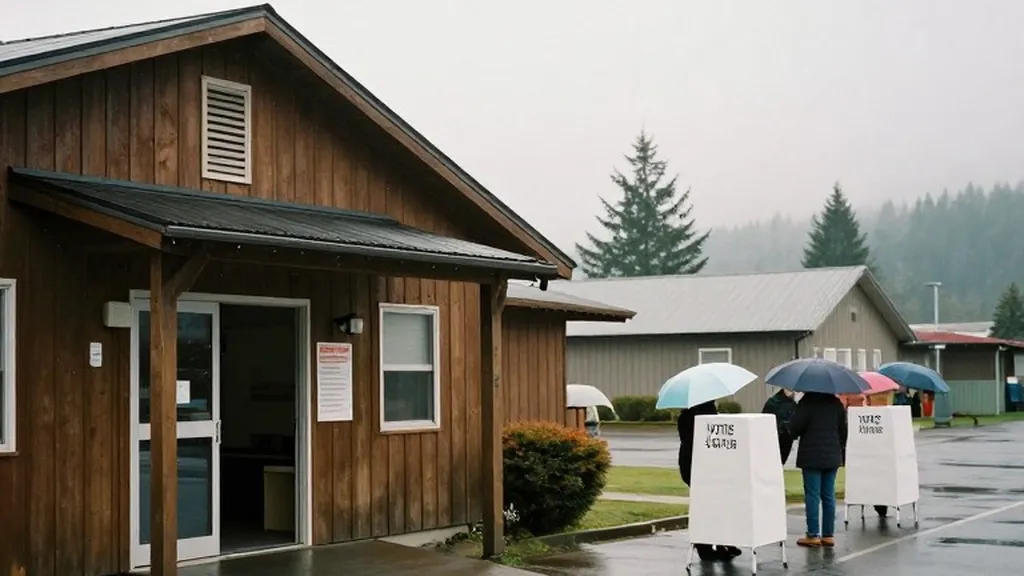
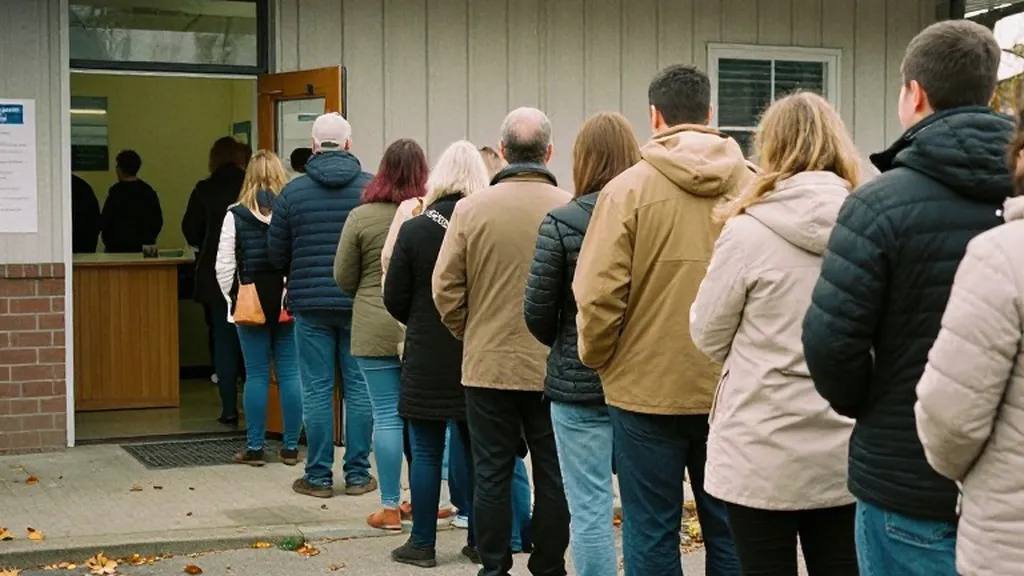
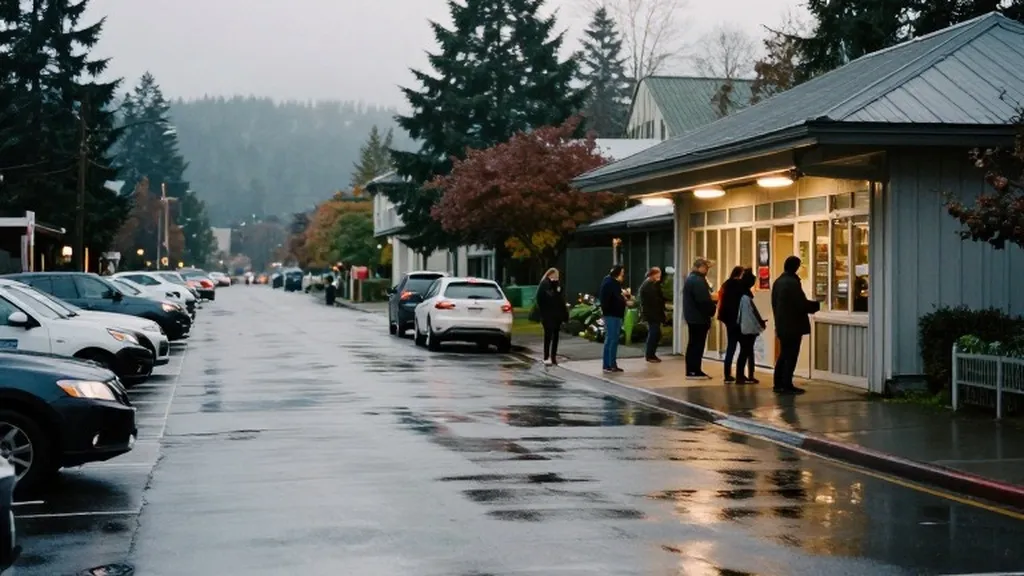
The Associated Press describes the election as a referendum on the president's performance, with many voters expressing frustration over high prices and an unpopular war with Iran. A recent AP-NORC poll indicates that 35 percent of U.S. Adults approve of Trump's job performance, while only 25 percent approve of his handling of the economy. Approximately seven in ten adults say the country is heading in the wrong direction, and most blame the president for rising costs. In the Pacific Northwest, polls are open in Washington, Oregon, Idaho, and Alaska, with Hawaii closing earlier in the day. In Washington, polls close at 8 p.m. Local time, and the state is voting by mail. Oregon polls are open from 7 a.m. To 8 p.m., also primarily by mail. Idaho polls are open from 8 a.m. To 8 p.m., and Alaska polls are open from 7 a.m. To 8 p.m.
Ballotpedia has identified 46 battleground districts that could swing the balance of power in the House. Of these, 25 are currently held by Democrats and 21 by Republicans. The political landscape has shifted due to mid-decade redistricting, with new congressional maps in effect for California, Florida, Missouri, North Carolina, Tennessee, Texas, and Ohio. These new boundaries are creating uncertainty in districts that were previously considered safe for one party or the other. For example, 21 districts held by Democrats voted for Trump in the 2024 presidential election, while nine Republican-held districts voted for Kamala Harris. This overlap suggests that these areas are particularly competitive in the current midterms.
In the Pacific Northwest, the regional context adds specific layers to the national race. In Oregon, voters are also deciding the open Senate seat and the open governor's seat. In Idaho, incumbent Senator Jim Risch and Governor Brad Little are seeking re-election. In Alaska, incumbent Senator Dan Sullivan is running for re-election, while the governor's seat is open. In Hawaii, Governor Joshua Green is running for re-election, though the state has no Senate race. The Associated Press notes that more than 57 million people had already voted as of Monday, surpassing early vote totals from four years ago in many closely watched states. This high level of early participation indicates strong engagement from both parties as they fight for control of Congress.
Republican National Committee Chairman Joe Gruters emphasized the importance of turnout in a recent statement. He said, "Everything depends on turnout. If we turn out our voters, we win, and that's what we've been planning for." Gruters noted that Republicans are bracing for the possibility of losing the House but are focused on holding the Senate. Conversely, Democratic Congressional Campaign Committee Chair Rep. Suzan DelBene stated, "The American people are angry. They want change." DelBene described Democrats as "cautiously optimistic" about their chances, particularly in districts where the president's approval ratings are low. Both parties are investing heavily in advertising, with the 2026 elections expected to be the most expensive in history.
Republican committees have outraised and outspent Democratic committees at the national level, aided by Trump-affiliated groups and Elon Musk. However, at the candidate level, Democrats have outraised their opponents. An analysis of AdImpact data shows that 88.1 percent of Republican general election TV ad spending has gone to states and districts that Trump won in 2024. This includes more than $850 million in spending in areas where he won by 10 points or more. This strategy reflects the belief that Republicans need to hold their base while Democrats focus on flipping districts in states the president won. The new maps in seven states complicate these calculations, as some districts may not vote as historically expected.
In the Senate, 35 seats are up for election, including 33 regular races and two special elections. Republicans currently hold 53 seats, Democrats hold 45, and two independents caucus with Democrats. Democrats need a net gain of four seats to achieve a majority, while Republicans can lose only two. In the Pacific Northwest, Oregon is holding an open Senate race, while Idaho and Alaska have incumbent senators running. The Associated Press notes that one or two seats could tip the balance in either chamber. If Democrats win even one chamber, investigations and possible impeachment proceedings become likely. House Democratic Leader Hakeem Jeffries has outlined a 100-day agenda focused on the cost of living and oversight if his party gains control.
Voters in the region are weighing various issues as they cast their ballots. Mark Barker of Palm Beach Gardens, Florida, said, "I've just been following Trump the whole time. I really think he's doing an awesome job." In contrast, James Moore, a 57-year-old librarian in Raleigh, North Carolina, said, "I'm paying more taxes. I'm paying more for my healthcare. I'm paying more for everything." These sentiments reflect the broader national mood, with many voters feeling the pinch of high prices. The Associated Press notes that most voters blame the president for the economic situation, which could impact the outcome in competitive districts across the country.