Court rulings shape voting rules ahead of Pacific Northwest ballot
Federal judges intervened to pause noncitizen voting measures in Alaska and California, while the Postal Service ramps up operations to ensure timely ballot counting.
By Aiko Brooks ·
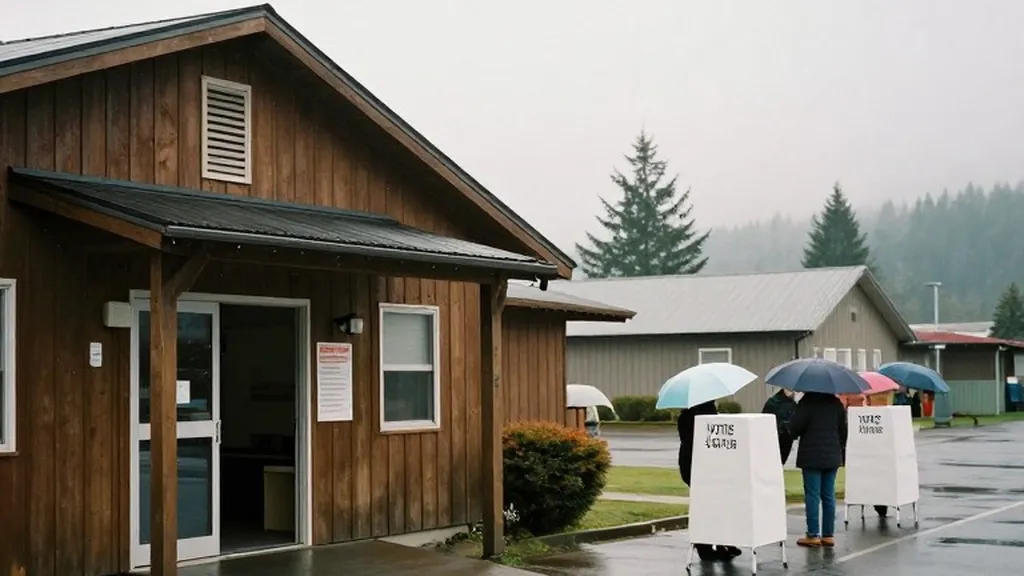
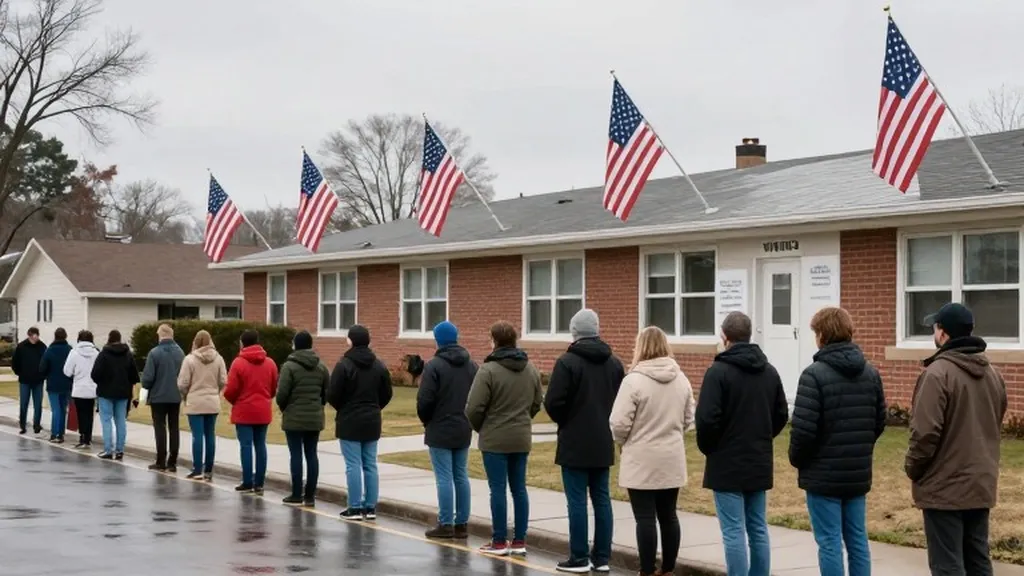
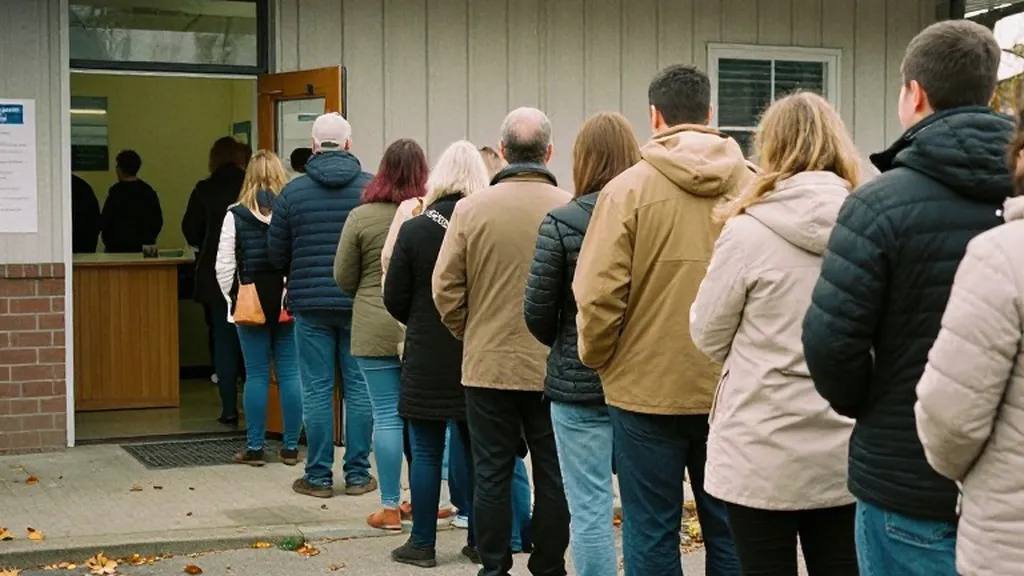
Election Day has arrived in the Pacific Northwest, with voters in Washington, Oregon, and Idaho heading to the polls or mailing in their ballots under a cloud of legal uncertainty. Federal courts issued temporary orders on Monday that directly affect how votes are processed in key states. In Alaska, a federal judge temporarily barred the Trump administration from executing a plan intended to prevent noncitizen voting. Critics of the administration's approach argue that the measure risks disenfranchising eligible voters and infringes upon the authority states traditionally hold over their own elections. The ruling provides a brief reprieve for election officials who had been preparing to implement the new verification protocols.
Simultaneously, a judge in California ordered the administration to stop demanding that state election officials segregate ballots cast by individuals appearing on lists of suspected noncitizens. This intervention comes as California voters, largely voting by mail, finalize their choices in what Ballotpedia notes is a state using new congressional maps after mid-decade redistricting. The legal maneuvering has raised concerns among Democratic officials, who fear that aggressive federal actions could lead to interference or intimidation. The Justice Department has threatened to prosecute local election officials, a move that has heightened tensions between federal and state authorities on the eve of the midterms.
In the Pacific Northwest, the stakes are particularly high for control of the U.S. Senate. Oregon has an open Senate seat, while Idaho features incumbent Republican Jim Risch and Alaska has incumbent Republican Dan S. Sullivan. The race in Alaska is rated as a toss-up to lean Democratic, making the legal challenges in that state even more consequential. The Trump administration filed a lawsuit related to the certification of the Senate result in Alaska, adding another layer of complexity to an already competitive race. In Oregon, polls are open from 7 a.m. To 8 p.m., and the state is deciding both a Senate and a governor race, with the latter also being an open seat.
Washington state voters are also engaged in the process, with polls closing at 8 p.m. Locally. There is no Senate or governor race in Washington this year, but the state serves as a bellwether for mail-in voting efficiency. The U.S. Postal Service has added hours, staff, and special lines to ensure that mail ballots are counted on time. This logistical push is critical for states like Washington and Oregon, where a significant portion of the electorate votes by mail. The added resources aim to mitigate any delays that could result from the high volume of incoming ballots, a process that has become increasingly scrutinized in the wake of the recent legal disputes.
Idaho voters will have polling places open from 8 a.m. To 8 p.m. As they choose between incumbent Republican Governor Brad Little and his Democratic opponent in the governor's race. The state also has a Senate race featuring incumbent Jim Risch. The Associated Press notes that the election is being viewed as a referendum on the first half of President Trump's second term. Polling from AP-NORC indicates that 35 percent of U.S. Adults approve of the president's job performance, while about 7 in 10 say the country is heading in the wrong direction. These sentiments are likely influencing voter turnout and engagement in the region, particularly among independents who feel the weight of high prices and economic uncertainty.
The legal battles extend beyond just the noncitizen voting issue. In Alaska, the lawsuit filed by the Trump administration highlights the broader conflict between federal and state election management. The administration has continued to make claims about voting fraud, including assertions that noncitizens vote in large numbers. Democrats in the region are watching closely, as any perceived federal overreach could impact local confidence in the results. The temporary bar on the noncitizen voting plan in Alaska means that election officials will proceed with their standard procedures, at least for now, while the legal case continues in the courts. This pause provides a window for the state to conduct the election without the immediate pressure of the new federal mandate.
In California, the order to stop segregating ballots for suspected noncitizens is seen as a victory for state election integrity advocates. The state has a large mail-in voting infrastructure, and the potential to set aside ballots could have created administrative burdens and confusion for voters. By halting this demand, the court allows California to follow its established protocols for counting mail ballots. This is particularly relevant for the Pacific Northwest, where neighboring states are observing California's approach to managing the mail ballot surge. The U.S. Postal Service's additional measures are designed to support these mail-heavy states, ensuring that ballots received by the deadline are processed and counted in a timely manner.
The mood among voters in the region reflects the national sentiment of caution and scrutiny. In Oregon, where both Senate and governor races are open, candidates have campaigned on issues of economic strain and the direction of the federal government. The Associated Press highlights that voters are struggling with high prices, a theme that resonates in the Pacific Northwest where cost of living concerns are prominent. In Idaho, the race is more partisan, with incumbent Jim Risch seeking to retain his seat in a state that voted for Trump in 2024. The legal developments in Alaska and California are being watched by officials in these states, who are preparing for potential challenges to their own election results.