Breaking: Election Day is here! Make your selections: Stakes are high in the Pacific Northwest
Voters across the nation are heading to the polls to decide the balance of power in Congress, with critical races unfolding in the Pacific Northwest and beyond.
By Rebecca Foster ·
It is Election Day, Tuesday, November 3, 2026, and voters are casting their ballots to determine who will control Congress for the final two years of President Donald Trump's second term. This midterm election serves as a significant referendum on the current administration, with the Associated Press describing the mood as one where voters are struggling with high prices and expressing anger over an unpopular war with Iran. The stakes are exceptionally high, as the results will dictate whether the president's party retains its grip on power or faces a shift in legislative control that could lead to new investigations and oversight proceedings.
In the United States House of Representatives, all 435 seats are up for grabs. Republicans currently hold 218 seats, while Democrats hold 214, with one independent and several vacancies. Democrats need a net gain of three districts to secure a majority, whereas Republicans can afford to lose no more than two seats. There are 60 House incumbents who are not running again, including 23 Democrats and 37 Republicans. The battleground is fierce, with 46 districts considered competitive. Notably, 21 districts held by Democrats voted for Trump in 2024, while nine Republican-held districts voted for Kamala Harris, creating a complex landscape for both parties.
The United States Senate race is equally critical, with 35 of the 100 seats on the ballot. This includes 33 regular elections and two special elections for the remaining terms of Marco Rubio in Florida and JD Vance in Ohio. Republicans hold 53 seats, Democrats 45, and two independents who caucus with Democrats. Democrats require a net gain of four seats to take control of the chamber, while Republicans can lose only two. Eleven senators, four Democrats and seven Republicans, are not seeking re-election. The winners of these races will begin their six-year terms on January 3, 2027. One or two seats could tip the balance in either chamber, making every district a potential deciding factor.
Thirty-six governorships are also up for election, with Republicans holding 26 offices and Democrats holding 24. Of the races on the ballot, each party holds 18 seats. Nineteen of these races do not feature an incumbent, as 15 governors are term-limited and others have chosen not to run or lost their primaries. Democrats are aiming for a net gain of two governorships to achieve a nationwide majority for the first time since 2010. The Associated Press highlights several competitive governor races, including in Georgia, Nevada, Ohio, Texas, Florida, and Iowa, where voters will decide the direction of state leadership in key battleground states.
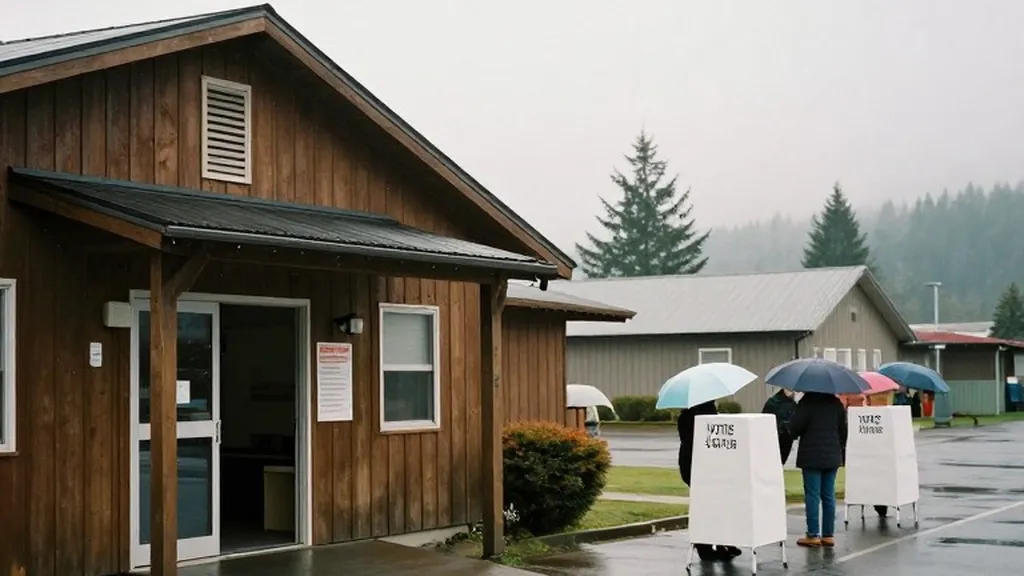
The Pacific Northwest is a focal point for this election, with significant races in Washington, Oregon, Idaho, Alaska, and Hawaii. In Washington, polls close at 8 p.m., and voters will decide House seats, though there is no race for the U.S. Senate or the governor's office. In Oregon, polls are open from 7 a.m. To 8 p.m., and voters will elect a new U.S. Senator and a new governor, as both seats are open. In Idaho, polls run from 8 a.m. To 8 p.m., with incumbent U.S. Senator Jim Risch and incumbent Governor Brad Little both on the ballot. In Alaska, polls are open from 7 a.m. To 8 p.m., and voters will decide the Senate seat held by incumbent Dan S. Sullivan and an open governor's seat. In Hawaii, polls close at 7 p.m., and voters will choose between candidates to succeed incumbent Governor Joshua Green.
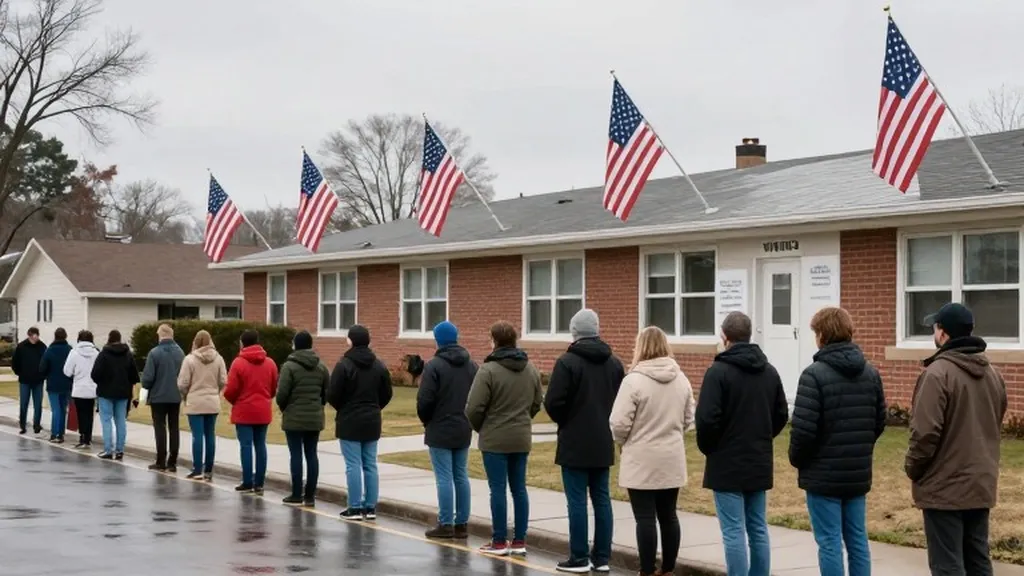
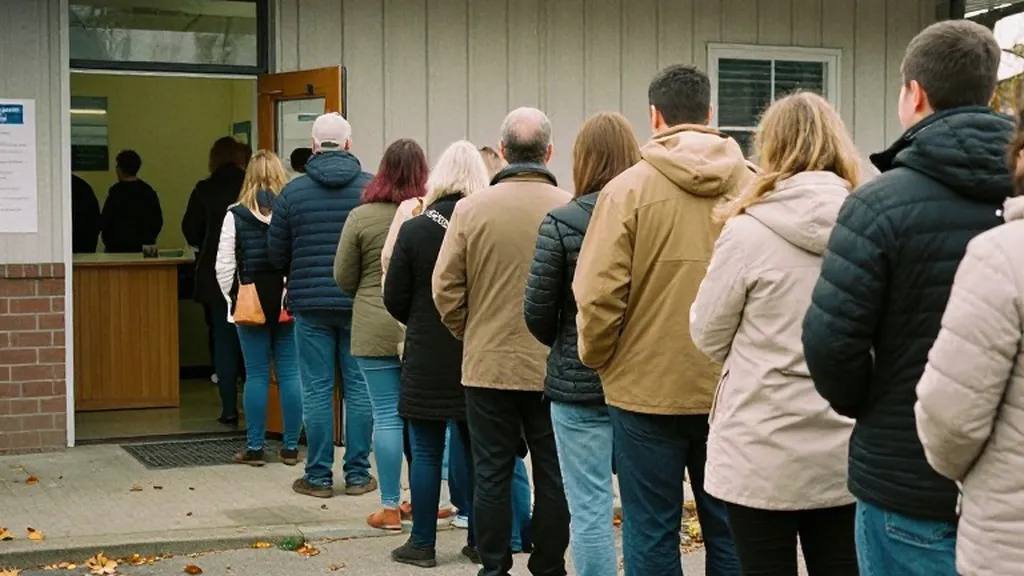
Voters are encouraged to find their polling place at vote.gov or through their state election office. It is important to check ID rules, as they vary by state, and to arrive early if possible. Anyone who is in line when polls close is entitled to cast a ballot. The U.S. Postal Service has added hours, staff, and special lines to ensure that mail ballots are counted on time. With more than 57 million people having already voted as of Monday, this early vote surpasses the numbers from four years ago in many closely watched states, indicating a high level of engagement among the electorate.
Republicans are bracing for the possibility of losing the House while fighting to hold the Senate, with many candidates keeping a distance from President Trump. Trump held dozens of rallies, ending Sunday in Salina, Kansas, where he urged voters to pretend he is on the ballot. His schedule included stops in Mississippi, South Carolina, and Texas. In contrast, Democrats are described as cautiously optimistic, with House Democratic Leader Hakeem Jeffries outlining a 100-day agenda focused on the cost of living and oversight if his party gains control of the House.
Polling data and NORC shows that 35% of U.S. Adults approve of Trump's job performance, while only 25% approve of his handling of the economy. Approximately seven in ten Americans say the country is heading in the wrong direction, and most blame the president for high prices. Voter sentiment is mixed, with Mark Barker of Palm Beach Gardens, Florida, stating that he thinks Trump is doing an awesome job. Conversely, James Moore, a librarian in Raleigh, North Carolina, noted that he is paying more for taxes, healthcare, and everything else. These personal experiences reflect the broader economic concerns driving voter turnout.
The 2026 elections are likely to be the most expensive in history. Republican committees have outraised and outspent Democratic committees, aided by Trump-affiliated groups and Elon Musk. However, at the candidate level, Democrats have outraised their opponents. 88.1% of Republican general election TV ad spending went to states and districts that Trump won in 2024, including more than $850 million in areas where he won by 10 points or more. This spending strategy highlights the focus on defending existing Republican strongholds while attempting to flip competitive districts.
In the Senate, several races are considered toss-ups or leanings according to recent ratings. Maine is a toss-up on all major ratings, with Senator Susan Collins facing Democratic former state Senate President Troy Jackson. Economic strain and tariffs have made the state competitive. In Iowa, the race is a toss-up or leans Republican, while Kansas is a toss-up to lean Republican. Alaska and Michigan are considered toss-ups to lean Democratic. Georgia is a lean to likely Democratic race, with Senator Jon Ossoff challenging Republican Representative Mike Collins. These races will be closely watched as they could determine the balance of power in the Senate.
Governor races in the Pacific Northwest are also drawing attention. In Oregon, the open seats for Senate and Governor are critical for both parties, as the state has historically been a Democratic stronghold. In Alaska, the Trump administration filed a lawsuit related to the certification of the Senate result, adding a layer of legal complexity to the race. Republicans are trying to beat the typical midterm pattern of losing seats through redistricting, but new districts in states like Florida may not vote as expected. This strategic maneuvering is part of a broader effort to maintain control of the legislative branches.