67 Lawmakers Back Eisenkot in Bid to Unseat Netanyahu
President Herzog is expected to grant the mandate Sunday, but the path to a governing majority of 61 seats remains blocked by internal disagreements over coalition partners.
By Aiko Brooks ·
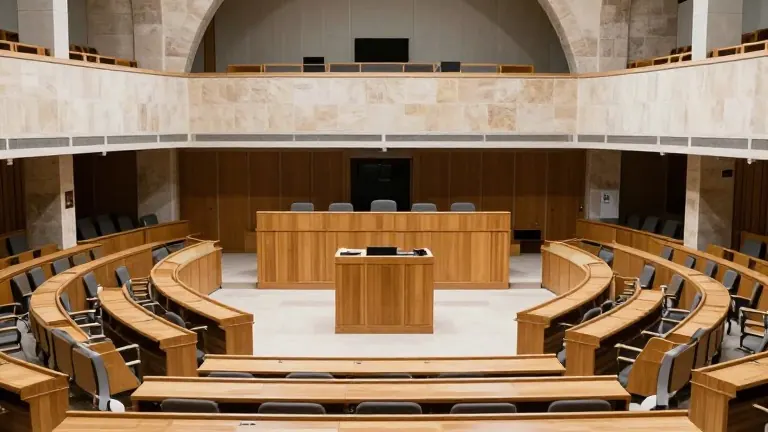
Gadi Eisenkot moved ahead of Prime Minister Benjamin Netanyahu this week in the race to form Israel's next government. By the end of the week, 67 members of the Knesset had endorsed Eisenkot for the first shot at building a coalition. Netanyahu secured the support of 46 lawmakers. President Isaac Herzog is scheduled to announce the winner of this preliminary vote on Sunday.
The numbers suggest Eisenkot will receive the mandate. However, securing the mandate is distinct from building a stable government. The Knesset has 120 seats. A governing majority requires 61. Eisenkot's four-party bloc, known as the change bloc, holds 48 seats. He needs the support of at least 13 additional lawmakers to reach that threshold.
Eisenkot has 28 days to form a government once the mandate is granted. President Herzog can extend this period by 14 days. If Eisenkot fails to secure a majority, the task may fall to another candidate, or Israel may face a fresh round of elections.
One potential path involves an alliance with the ultra-Orthodox parties. United Torah Judaism, which holds 7 seats, told Herzog it would not endorse either candidate. The party signaled it would support whichever bloc agreed to concessions on Haredi conscription, including dropping sanctions against those who refuse military service. If United Torah Judaism shifts its support to Eisenkot, the change bloc could reach a plurality if the Arab parties abstain.
Avigdor Lieberman, leader of the Yisrael Beiteinu party and a member of the change bloc, signaled openness to this arrangement on Friday. Lieberman has historically opposed the ultra-Orthodox parties. He wrote on X that the election results require politicians to show flexibility and make painful compromises. However, he also ruled out supporting a minority government, effectively requiring the support of both ultra-Orthodox parties to reach 61 seats.
This creates a hurdle because Shas, the other major Haredi party, has maintained a close relationship with Netanyahu. Shas endorsed Netanyahu during the consultations. No indication has emerged that Shas intends to abandon him. Dan Illouz, a lawmaker from Lieberman's party, warned that the change bloc cannot give up on a conscription law, signaling internal resistance to compromises on military service.
A second potential path involves cooperation with the Arab parties. The Ra’am party and the Joint List together hold 19 seats. Eisenkot could secure a majority with the active support of Ra’am and the abstention or external support of the Joint List. The Joint List has signaled willingness to cooperate to bring down Netanyahu's coalition.
Lieberman opposes this route as well. He stated that the change bloc must not establish a government that relies on the abstention of the Joint List and Ra’am. Eisenkot previously stated in an interview that the Arab parties did not meet his conditions for joining a government, specifically the recognition of Hamas as a terrorist organization.
A third option is a national unity coalition between Netanyahu and the change bloc. Leaders of the change bloc have largely ruled this out. Eisenkot described an urgent need to replace Netanyahu's leadership. Lieberman declared that the Netanyahu era must come to an end. Yair Golan, leader of the Democrats, cited a historic responsibility to send Netanyahu home. Naftali Bennett, who leads B’Yachad, also emphasized the urgency of replacing the current government.
Netanyahu prefers another election to giving up the office. A unity government would likely require him to remain prime minister initially under a rotation agreement. Eisenkot's overtures to the ultra-Orthodox parties may be intended to lower Netanyahu's bargaining power in such negotiations. As of Friday, no path to a 61-seat majority had been fully secured.