Learjet Crash Kills Nine as NTSB Finds Signs of Pre-Impact Disintegration
A family of four was among the dead in the West Palm Beach crash, while federal investigators say the plane began breaking apart before it struck a residential street.
By Aiko Brooks ·
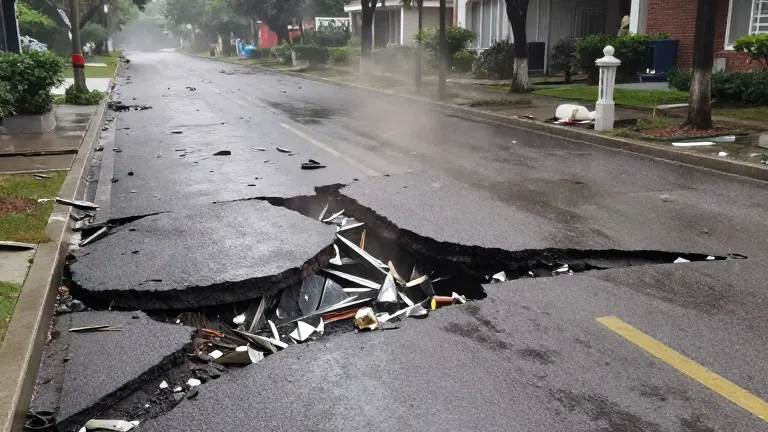
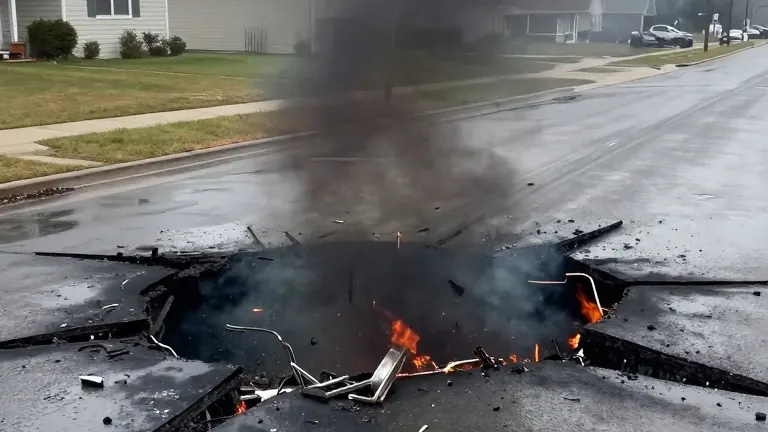
A Learjet traveling through Florida airspace disintegrated above a West Palm Beach neighborhood on Sunday, killing all nine people aboard the aircraft. The crash site is located near Greenacres, where the plane struck a roadway and exploded, leaving a crater in the asphalt.
A family representative issued a statement on Facebook identifying the four passengers who were members of one household. Adam Robinson, Helen Sharp, and their children Emma and Charlie were killed. The statement also named Rachael Reed, Charmi Fehr, and Anita Maria Cetina as other victims. One of the pilots, Nathalia Gadelha Filgueiras, was identified by her mother. The second pilot has not yet been confirmed.
Federal investigators from the National Transportation Safety Board held a news conference on Monday to outline their findings. NTSB member Tom Chapman said evidence suggests the aircraft started breaking up before it made impact with the ground. He noted that debris could be scattered far from the primary crash site.
"We do have some indication that the aircraft was breaking up before impact," Chapman said. "We may find parts of the aircraft some distance away from the actual impact site." NTSB investigator Timothy Monville described the scene as a multi-day process. He cited the difficulty of recovering major wreckage from the impacted crater on the roadway as the biggest obstacle.
Aviation safety expert Jeff Guzzetti, a former NTSB and Federal Aviation Administration investigator, offered technical analysis of the crash trajectory. He suggested that key components of the jet's tail may have been lost during turbulence or a nose-dive. Guzzetti stated that losing those components would make the airplane uncontrollable, which could explain the missile-like profile observed just before the crash.
Weather conditions are a major focus of the investigation. Rain pounded the region on Sunday, and one pilot reported icing conditions at a high altitude in communications with air traffic control. FlightRadar24 radar maps combined with the flight path suggest the plane flew directly into a rapidly expanding storm cell. Chapman said investigators still need to determine the specific conditions at 35,000 feet.
The plane was originally equipped with a cockpit voice recorder, which investigators hope to recover. The cause of the crash remains under active investigation as teams work to gather evidence from the scene.