NTSB recovers voice recorder from Florida Learjet crash
The device, found at the crash site after a fireball, will be analyzed to determine if it captured the pilots' final moments during severe turbulence.
By Rebecca Foster ·

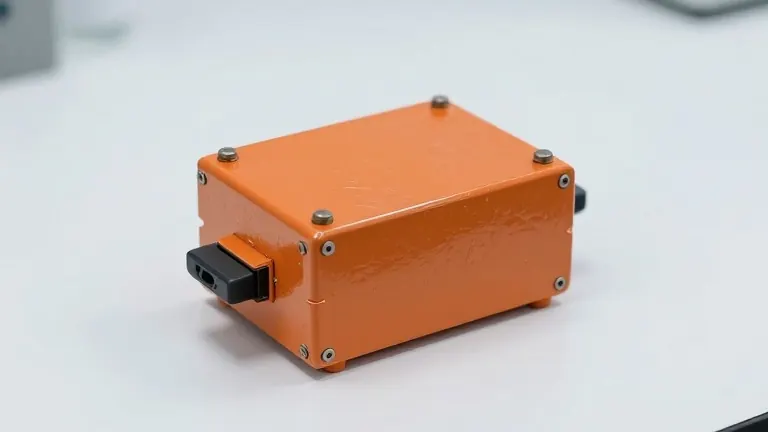
The National Transportation Safety Board announced on Monday that investigators have recovered the cockpit voice recorder from a business jet that crashed in Florida last week. The device was located at the site where the Bahamas-bound Learjet struck the ground and exploded in a fireball on Nov. 1. All nine people aboard the aircraft were killed in the accident.
The NTSB stated that the recorder is currently being evaluated at a laboratory in Washington. While the agency has not yet determined if the device is damaged or functional, photos released to the public show the orange-painted metal shell in decent condition. Aviation safety expert Jeff Guzzetti told The Associated Press that the physical state of the unit makes it plausible that data survived the impact. He noted that if the unit is from the accident flight, the information it holds will be a major asset for the investigation.
Data from the recorder could reveal what the pilots said to one another as they navigated severe weather. Witnesses and air traffic control logs indicate the plane was thrown up and down more than 700 feet. The co-pilot requested a different route through the area, but the jet appeared to steer around a large storm cell only to enter a rapidly developing smaller one. The voice recording may clarify the decision-making process during those final moments.
Previous physical evidence supports the theory that the aircraft broke apart before hitting the ground. Investigators found pieces of the elevator, the tail part that controls pitch, more than a mile away from the main crater. This detail helps explain the trajectory of the debris field and the mechanics of the failure.
Guzzetti pointed out that recovery does not guarantee usable data. He cited a January 2025 crash in Philadelphia involving a medical transport plane, where the recovered recorder was found to have likely malfunctioned for several years prior to the accident. The current analysis will determine if the Florida Learjet’s unit suffers from a similar issue.
The investigation team will also review maintenance records and interview officials from Upper Jets, the operator of the flight. Staff from the Austin, Texas airport, where the plane departed, and relevant air traffic controllers are part of the interview list. The NTSB, which employs roughly 400 workers and manages over 1,200 active investigations, typically takes 12 to 18 months to complete a case, though complex scenarios can extend that timeline.