Ghostwriter McGraw Loses Book Deal After AI Detector Flags Her Sample
A study published in June found that four major detection tools produced conflicting results on the same texts, complicating efforts to verify authorship.
By Aiko Brooks ·
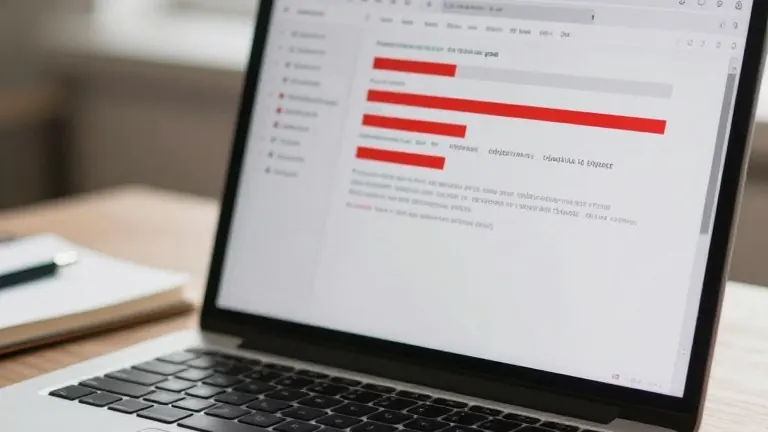
Ghostwriter Sally McGraw received an email informing her that multiple artificial intelligence detection tools had flagged her writing sample as machine-generated. The feedback arrived after she submitted the work for a potential book proposal project. McGraw, who has worked as a professional nonfiction writer for more than 20 years, stated that she had not used AI to generate the text. The client confirmed in an email that she had screened the work for AI. She noted that the results were not the sole reason for hiring a different writer, citing experience and fit as factors. McGraw said she was paid for the sample but believes the detector results cost her the full proposal opportunity.
Publishers are increasingly using these tools to manage a rising volume of submissions. Neil Clarke, publisher and editor of Clarkesworld, reported that the magazine received roughly 1,100 submissions per month in 2021. By February 2023, that number had doubled following the widespread availability of AI agents like ChatGPT, Claude, and Gemini. Clarke temporarily closed the submission portal and estimated his own workload increased by about 30 percent. He described the influx as introducing an element of mistrust into the editing process.
Researchers published a study in the International Journal for Educational Integrity in June that compared the accuracy of four widely used detectors. The team tested 160 academic papers across four categories: entirely human-written, entirely AI-written, a combination of the two, and AI material rewritten by a human. Pangram was the most consistently accurate of the four tools tested. It correctly identified AI use in 37 of the 40 papers with combined text and in 37 of the 40 papers where a human rewrote AI-generated text. Max Spero, CEO of Pangram, stated in an emailed response that the detector can make mistakes, particularly when there is not much writing to evaluate.
Chris Callison-Burch, a professor of computer and information science at the University of Pennsylvania, explained that many detectors ask a large language model how predictable a passage is. He noted that language models often find text from their training data unusually predictable. This dynamic affected science blogger Janelle Shane, who tested excerpts from her 2019 book You Look Like a Thing and I Love You in late 2022. One detector reported a 98.7 percent confidence that a passage was machine-generated. Shane called the result a clear and glaring false positive.
Callison-Burch said that detectors look for clues in word choice, punctuation, and sentence structure. Patterns such as the word delve, frequent em dashes, and ideas grouped in lists of threes can trigger an AI-positive result. Opening sentences with adverbs like notably or crucially can also trigger flags. He explained that detectors weigh patterns across a whole piece, so a single em dash or word does not necessarily indicate bot usage. However, these are familiar habits for human writers.
The Authors Guild said in May that the use of AI detectors creates an environment reminiscent of witch hunts. The organization warned that a false positive can cost an author their publishing contract and reputation. A false negative, where AI-generated work slips through undetected, can cause readers to lose trust in authors and the industry. Clarke said he does not personally use AI detectors to screen incoming manuscripts. He believes certain tools could help overwhelmed editors manage volume if they check the findings. He cautioned against turning suspicions into accusations that could damage a writer's reputation, stating that submissions should end in rejection, not an accusation.
McGraw said the fear of another accusation has changed how she writes. She now avoids certain words and sentence constructions and occasionally leaves out commas she used to include. She hopes the inconsistency will help prove that a human wrote the text. McGraw said she misses her em dash, a style choice she learned in journalism school and used for decades. She described the situation as trying to fool a machine into thinking she is not a machine. She said she is bracing for the time when a bigger assignment is on the line.