AI Drones Change Ukraine Battle Rhythm
Ukrainian defense firms are deploying autonomous systems that operate independently for the final stretch of flight, aiming to outpace Russian reaction times.
By Matthew Qureshi ·
The war in Ukraine has shifted from conventional artillery duels to a high-speed contest of software and speed. Ukrainian defense firms are now fielding drones that use artificial intelligence to take over control in the final moments of a mission, a development that is altering the pace of combat on the front lines.
Yaroslav Azhnyuk, the 37-year-old founder of The Fourth Law and Odd Systems, says these systems provide an asymmetric advantage. He argues that when one side possesses capabilities that are orders of magnitude higher than the other, it can make that side 10,000 times more effective. Dozens of Ukrainian military units already use the company’s autonomous drone, the Lupynis-10-TFL-1.
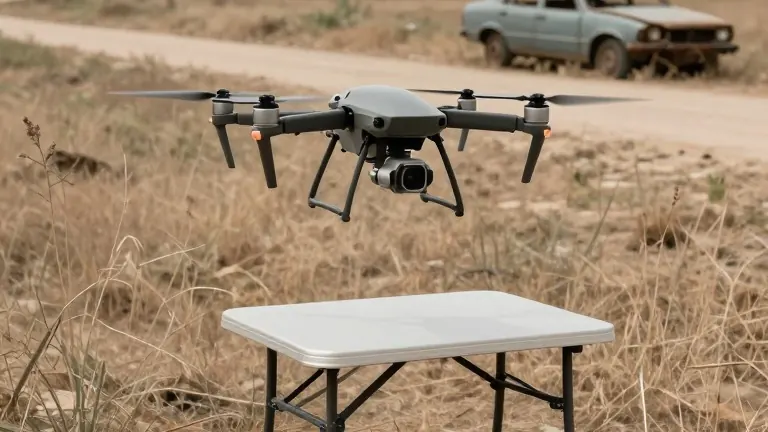
The technology works by combining a standard first-person-view drone with a guidance unit containing a microcomputer. A human pilot flies the drone to the target area. In the last 500 meters, or 0.3 miles, the onboard AI takes over. This system uses a deep-learning neural network trained on hours of combat footage to recognize vehicles, light-armored vehicles, tanks, and flying objects. Once the software locks onto a target, the pilot can release the control stick, and the drone flies itself to the impact point.
Azhnyuk distinguishes this military AI from the large language models that power chatbots or the systems used in self-driving cars. He describes the drone software as simple image recognition tools that allow the machine to navigate or choose targets without human input. The company named the drone after Anatoliy Lupynis, a 20th-century Ukrainian poet and political activist who survived decades of Soviet imprisonment. The firm names its weapons after Ukrainian intellectuals and artists killed or persecuted by Russians to help resurrect their memory.
President Volodymyr Zelenskyy has warned that AI could lead battlefield decisions as soon as next year. While Azhnyuk acknowledges the ethical concerns, he notes that humans have worried about new tools since the invention of fire and steel. He insists that safeguards prevent the drones from acting independently, as humans still select the initial target. His primary argument is one of survival. He says if adversaries use AI for offensive decision-making and defenders refuse to use it, the defenders have lost because machines can decide in microseconds while humans take minutes or hours.
During a test outside Kyiv, a team member using the call sign Stab demonstrated the system. He pointed out the microcomputer inside the drone, joking that all the mind is contained in that small 3-D model. Another team member, using the call sign Professor, flew the drone toward a dilapidated car. After the red flash indicated a lock, Professor let go of the stick. The drone completed the flight alone. Stab noted that the AI drones are also harder to jam than traditional systems.
Azhnyuk compares his drones to calculators rather than the Terminator. He admits that future drones may make their own decisions on designating targets. For now, the focus is on immediate utility. He says that if Ukraine loses the war, there will be no way to argue about the ethics of AI. The most important thing, he says, is not to die.