Canada Faces EU Carbon Charges on $2.8 Billion of Metal Exports
Internal government documents show Canadian iron, steel, and aluminum shipments will face border charges in 2027 with no exemption granted.
By Matthew Qureshi ·
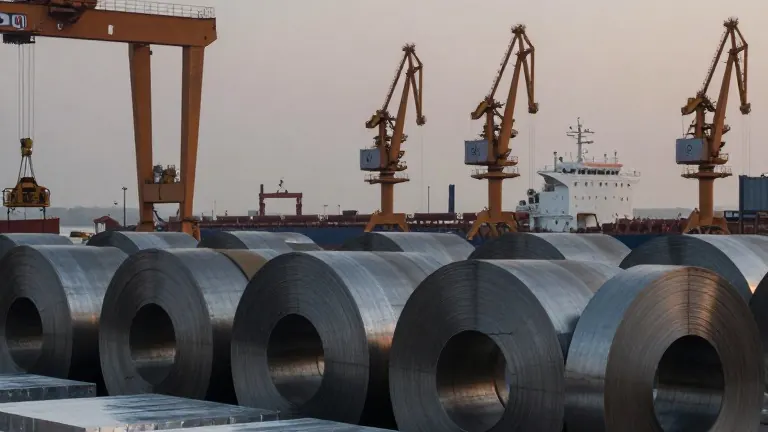
Canada will pay carbon border charges on about $2.8 billion worth of iron, steel, and aluminum exports annually as the European Union begins collecting the fees in 2027. A Global Affairs Canada memorandum signed on December 10, 2025, describes the measure as a border charge or effectively a carbon tariff.
The European Union's Carbon Border Adjustment Mechanism applies at a low level starting in 2027 and phases up to full rates by 2034. Canadian exporters must measure the emissions embedded in their products and submit the figures to accredited verifiers before shipments arrive at European ports.
Canada receives no exemption from the charge. Switzerland, Norway, Iceland, and soon the United Kingdom are exempt because their carbon pricing systems link to Europe's Emissions Trading System. Canada's carbon price does not link to that market. The 2025 carbon price in the European Union stands at about $134 per tonne, compared to $95 per tonne in Canada.
The exposure concentrates in two provinces. Newfoundland and Labrador exports about $885 million in iron and steel each year, roughly half of which falls under the new charge. Quebec exports about $792 million annually in aluminum, iron, and steel facing the same levy. Those averages cover the years 2021 through 2024.
Environment Minister Julie Dabrusin attends the Canada-EU Summit in Montreal this week. In an October 22 interview, she did not say whether negotiators had reached progress on recognition of Canada's industrial carbon pricing. Canadian diplomats and ministers are focused on minimizing the charge's impact on exporters, according to the internal documents.
Aaron Cosbey, an economist at the International Institute for Sustainable Development who studies carbon border adjustments, estimates Canadian steel could cost an additional $150 per tonne once the mechanism reaches full rates in 2034. Canada Nickel CEO Mark Selby said his company's Timmins, Ontario project, which uses low-carbon electricity and plans to store captured carbon underground, would face costs of pennies per tonne. The company has not calculated final compliance costs. Rio Tinto and ArcelorMittal declined to comment.