Iran executes three men convicted of spying for Israel and the US
The judiciary confirmed the sentences after the Supreme Court upheld verdicts related to the January 8 and 9 demonstrations in Karaj.
By Matthew Qureshi ·
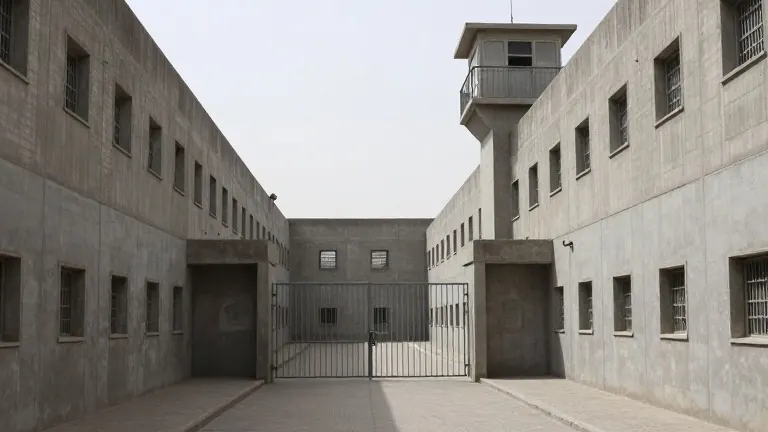
Iran executed three men on Sunday who were accused of operating on behalf of Israel and the United States during the nationwide anti-government protests of January. The Islamic Republic's judiciary announced the executions following the Supreme Court's decision to uphold their death sentences.
The convicted individuals are Hassan Divband, Hamid Kazemi, and Reza Zanganeh. Judicial authorities stated that the men participated in armed attacks, arson, and the destruction of public infrastructure during demonstrations held on January 8 and 9 in Karaj, a city located west of Tehran. The court orders also included the confiscation of the men's property.
State media reported that the defendants acted in response to calls from exiled Crown Prince Reza Pahlavi. Officials described their actions as part of an Israeli-American plan to destabilize the country. The judiciary characterized their conduct as operational activities against Iran's national security and interests.
According to the authorities, the group attacked government buildings, destroyed surveillance cameras, and damaged an electrical substation. The damage to the substation caused power outages in parts of Karaj. Investigators claimed to have recovered two hunting rifles, ammunition, and materials used to create 20 Molotov cocktails and 15 homemade explosive devices. The defendants also assaulted two individuals they believed were security personnel.
The Human Rights Activists News Agency reported on Friday that Divband and Kazemi had been sentenced to death by Branch 2 of the Karaj Revolutionary Court. Judge Sabzevari presided over the case. The organization noted that both men were held at Karaj Central Prison under laws concerning operational activities against national security. The judiciary stated that confessions, surveillance footage, and intelligence reports supported the convictions, though the evidence has not been independently examined.
Divband, 30, owned an automotive repair business. The Intelligence Ministry's Alborz provincial office arrested him in January. Authorities alleged he recruited employees and relatives to join the demonstrations. IranWire reported that several of his family members were also detained during the January crackdown. These include his father Mohammad-Ali Divband, 50, his relative Ali-Asghar Divband, 29, Ali-Akbar Divband, 15, and Hamidreza Forouhar, 20.
Zanganeh, 27, is an automotive technician. The Hengaw Organization for Human Rights stated that he was sentenced to death on accusations of cooperating with Israel's Mossad intelligence agency. He was arrested at his workplace in April and held at Ghezel Hesar Prison. People close to Zanganeh suggested the espionage charges arose from his work repairing imported vehicles and his prior business travel abroad.
The judiciary said eight other defendants in the Karaj case received prison sentences ranging from five to ten years. These executions follow legislation introduced in 2025 that increased punishments for espionage and cooperation with hostile countries. The law was accelerated after the Twelve Day War between Israel and Iran in June 2025. It expanded the range of national security offenses punishable by death.
Human Rights Watch and the Abdorrahman Boroumand Center for Human Rights in Iran warned in September that the new law was being applied to protesters without proof of genuine espionage. Their investigation of 29 executions linked to the January protests found that 16 cases did not involve allegations of killing anyone. Bahar Saba, a senior Iran researcher at Human Rights Watch, stated that the authorities' message is that protests will be met with brutality.
An October investigation by Iran International identified at least 70 executions in political and security cases between January 7 and October 5. Of those, 35 were connected to the January protests. The group also identified 194 people facing death sentences in political and security cases, including 113 arrested in connection with the demonstrations. The Norway-based Iran Human Rights organization reported on November 3 that it documented at least 691 executions across all criminal categories during the first ten months of 2026. This total included 77 executions in October alone.