Chile's Atacama Desert blooms after record El Niño rains
Over 200 plant species have emerged across the arid landscape, drawing 300,000 tourists and prompting officials to seek UNESCO protection for the phenomenon.
By Aiko Brooks ·
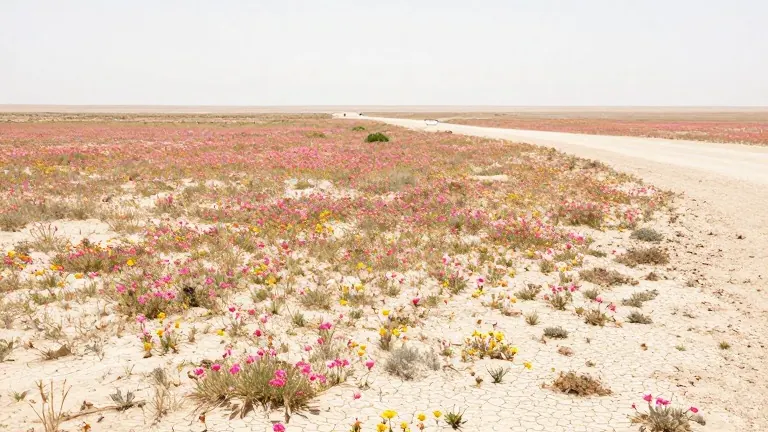
Chile's Atacama Desert is currently covered in pinks, yellows, and purples following a surge in rainfall linked to the El Niño super cycle.
Heavy rains in July and August caused flash floods that damaged dozens of homes and forced hundreds of residents to evacuate. The water penetrated deep into the soil, waking dormant seeds that had lain under the sand for decades. More than 200 species are now in bloom across the region, marking the largest floral display in 30 years and potentially the largest ever recorded.
Moisés Grimberg, administrator of Llanos de Challe National Park, described the event as a natural seed bank becoming active. He noted that the biological window for these species to complete their life cycle lasts only two to three months. Llanos de Challe, a 113,000-acre park along the arid coastline, typically hosts about 10,000 visitors annually. However, 15,000 tourists visited the park in just the last few weeks. Chile's national tourism board projects 300,000 overnight trips in the region during the two-month bloom period.
The phenomenon is driven by climate changes that bring unseasonal rains to the driest nonpolar desert on Earth. Scientists observe a transient ecosystem emerging, with insects hatching and attracting lizards, bats, and guanacos. Biologists from INIA, Chile's national seed bank, are collecting specimens to analyze before the flowering season ends. Ana Sandoval, a biologist with INIA, said the desert is awakening and that the plants are waiting for the right conditions to surface.
Local authorities are moving to protect the site further. A national park dedicated to the bloom was created in June 2023, covering 141,000 acres. Miguel Vargas, governor of the Atacama region, has begun the process of seeking UNESCO World Heritage recognition. Vargas stated that such recognition would help diversify the regional economy, which is currently heavily reliant on mining, and put the Atacama region on the world stage. He aims for the site to become Chile's eighth World Heritage site within a couple of years.
The current bloom is projected to last until mid-November. As the flowers fade, scientists will investigate two key questions: whether this was the largest flowering event on record and if the collection reveals any previously unknown species among the millions of plants.