Bay Area Gives Homeowners Extra Time for Electric Heaters
Regulators added a one-year grace period and expanded exemptions for low-income residents and homes with limited space.
By Aiko Brooks ·
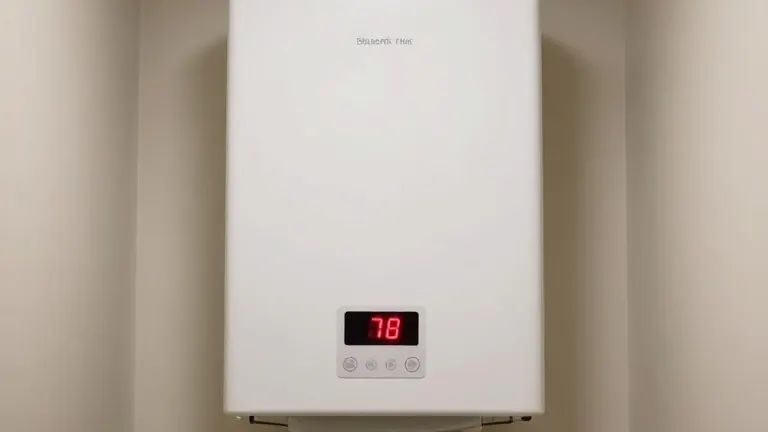
Bay Area air regulators voted 16-1 on Wednesday to push back the state’s first ban on gas water heaters by one year. The decision delays the deadline for compliance to January 2028, giving homeowners an additional year to prepare for the switch to electric heat pump models.
The original rule, adopted in 2023, does not force owners to replace working units. It only applies when a gas water heater is swapped out. Under the new timeline, most property owners replacing a unit will need to install a model that emits no nitrogen oxides. This typically means buying an electric heat pump.
The vote includes substantial exemptions that allow up to half of Bay Area households to skip the electric requirement. Owners with low incomes, those who spend a large share of their earnings on housing, and residents in homes with tight spaces or outdated electrical systems can apply for these waivers. The air district estimates that about 20% of households qualify based on income or housing cost criteria. Another 20% of installations may qualify for a one-time exemption due to physical barriers like cramped closets or low ceilings.
Property owners also retain the option to purchase water tanks of 30 gallons or smaller. Roughly 10% of sales fall into this category, and no zero-emission models of that size are currently available in the United States. For larger water heaters, common in apartments and businesses, the new deadline is 2033 rather than the previously planned 2031.
The delay reflects a wider trend in California where regulators are easing requirements for home appliances. Last year, Southern California air regulators rejected a plan to phase out gas water heaters and furnaces. The state Air Resources Board has also moved away from its goal of requiring all new heaters to be zero-emission by 2030.
Supporters of the Bay Area rule argue that the amendments address key concerns raised by environmental groups. SPUR, a Bay Area urban policy nonprofit, stated that the exemptions largely match what advocates requested. An air district spokesperson said the rule will still prevent up to 16 premature deaths and 21 new asthma cases annually. The agency also estimates the rule will avoid $90 million in healthcare costs, though staff note that the exemptions could reduce the projected pollution cuts by roughly half.
Cost remains a central issue for property owners. The air district says a heat pump water heater costs about $3,500 more to install than a gas model. While heat pumps use significantly less energy, utility savings are often smaller because electricity costs more than gas in California. A consultant for the district estimated the amended rules will cost households about $372.8 million a year, after accounting for $60.8 million in energy bill savings.
Joshua Howard, executive vice president of local public affairs for the California Apartment Association, argued that the mandate ignores the complexities of older buildings. He noted that many multi-unit structures were built in the 1960s and 1970s or earlier. Adam Pearce, president of the California Rental Housing Association, said the rule kicks the issue down the road and suggested that an incentive-based approach would gain more support over time.
Board member John Gioia, a Contra Costa County supervisor, voted to delay the rule while supporting the amendments. He stated that the exemptions are large enough to accommodate lower-income residents who may struggle with the costs. Board member Ray Mueller, a San Mateo County supervisor, said he wished the board could repeal the rule entirely. Shamann Walton, a San Francisco County supervisor, voted no citing affordability concerns.