California vehicle plates: Front plate remains mandatory
The DMV confirms that passenger cars and trucks must display two plates, while Menifee opens a new $16 million bridge on Bradley Road.
By Aiko Brooks ·
California drivers must still install front license plates on most passenger vehicles. The Department of Motor Vehicles issues two plates for standard cars and trucks, and state law requires one on the front and one on the rear. This rule applies to all passenger vehicles, including Tesla models. The requirement stems from the California Vehicle Code, which dictates that when a department issues two plates, they must be placed on the front and back of the specific vehicle for which they were issued.
The law contains specific exceptions for certain vehicle types. Motorcycles, trailers, and vehicles owned by dealerships are exempt from the front plate requirement. Some classic cars with special interest status and other specific cases also fall under different rules. If a vehicle receives only one plate, it goes on the back, unless it is a tractor-trailer, which follows different display guidelines. All plates must be securely fastened, clearly visible, and easy to read without being altered.
The requirement has been in effect for years, but recent trends in vehicle design have led to more public questions. Some drivers report seeing vehicles without front plates, prompting inquiries to the DMV. The agency maintains that the two-plate standard remains the norm for the majority of registered passenger vehicles. The visual consistency of the license plate system helps law enforcement and toll systems identify vehicles on the road.
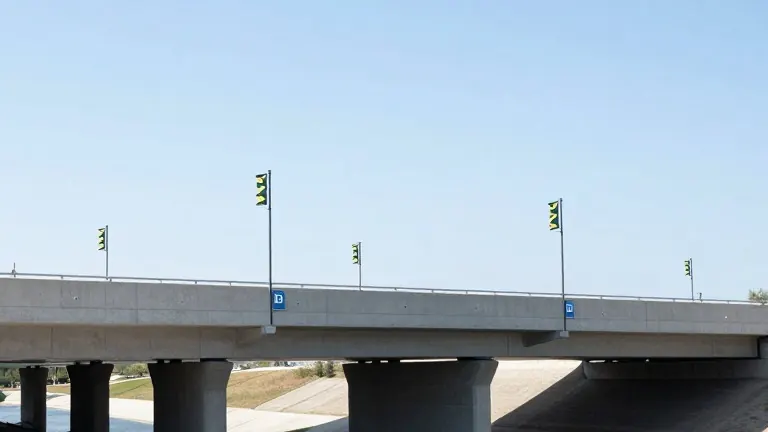
In a separate infrastructure update, the city of Menifee opened the Freedom Bridge on Bradley Road on Oct. 13. The 365-foot structure replaces the former Bradley Road bridge over Salt Creek. The city council renamed the bridge following a recommendation from the city’s Veterans and Military Families Advisory Committee. The new name honors the local veteran community.
The bridge features banners representing the six branches of the United States Armed Forces. It provides reliable north-south connectivity on Bradley Road during rain events. The structure improves safety by allowing drivers to bypass flooded areas during storms. Emergency response teams also benefit from the more reliable route, which reduces travel times to the community. The bridge includes dedicated bike lanes and sidewalks.
Construction on the project began in July 2025. The total cost was $16 million. Funding came from a mix of federal, state, county, and local sources. The city confirmed the opening in a press release. The bridge is now fully operational for traffic and pedestrians.