Arizona Tech Council urges case-by-case review over data center freeze
The state's technology leadership argues that pausing development entirely would risk losing over $109 billion in committed investment and nearly 90,000 jobs.
By Rebecca Foster ·
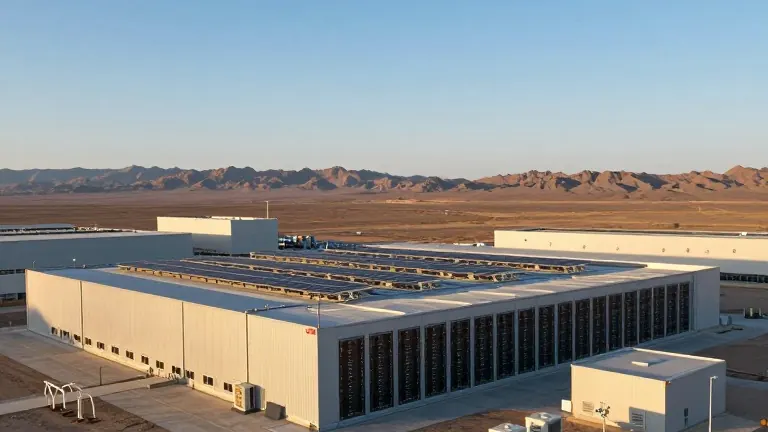
Arizona residents face a choice between maintaining a strict pause on new data center projects or allowing construction to continue under specific environmental standards. The debate centers on whether to stop all new development or to evaluate each proposal on its merits regarding water and energy use.
In June 2026, Governor Katie Hobbs signed the FY2027 state budget, which included a three-year pause on sales tax exemptions for new data centers. Two months later, Attorney General Kris Mayes proposed a statewide moratorium on new development. Steven Zylstra, president and CEO of the Arizona Technology Council, argues that a blanket freeze is too restrictive for the state's growing digital economy.
The technology sector in Arizona has expanded rapidly since lawmakers passed tax incentives in 2013. The state attracted more than $109 billion in investment between July 2025 and June 2026. This growth supports more than 20,000 direct jobs and nearly 88,000 total positions across the state. For every job in the data center sector, six additional jobs are supported in construction, engineering, local services, and trades.
The industry generated over $1 billion in state and local taxes in 2024. Zylstra notes that this infrastructure supports daily digital activities, including banking, telehealth, and government records, long before the rise of artificial intelligence. He emphasizes that the sector also contributes to workforce development, citing Meta’s investments in training and higher education costs for Arizonans.
Concerns about water consumption remain a primary focus for local communities, particularly given pressures on the Colorado River. Zylstra states that the industry has adopted water-efficient technologies, such as closed-loop cooling systems. In 2025, data centers accounted for one-tenth of 1% of Arizona’s annual water use. He argues that these figures suggest the impact is manageable if standards are maintained.
The Arizona Technology Council recommends that communities evaluate proposed data centers individually rather than imposing a statewide stop. This approach would allow projects that meet specific criteria for water use, energy efficiency, and sustainable management to proceed. Zylstra warns that halting development entirely could shift economic gains to competing states like Virginia and Georgia, which are also scaling their AI infrastructure.
Zylstra acknowledges that residents have reasonable questions about environmental impact and energy efficiency. He suggests that the current pause allows time to refine standards without permanently stalling the sector. The council believes that a working industry is necessary to continue improving practices and attracting new investment.
The state’s economic strategy has relied on positioning Arizona as a major technology hub. Lawmakers from both parties initially supported policies that attracted billions in capital. Zylstra argues that the state should continue this trajectory by balancing community concerns with the need for economic growth and innovation.
The decision on how to proceed lies with state lawmakers as they review the implications of the recent budget actions and the proposed moratorium. The outcome will determine the pace of new construction and the state's role in the national technology market. The Arizona Technology Council maintains that the state should keep improving its existing infrastructure rather than pausing it indefinitely.
More Business · Consumer Watch · Report a business · Got a Story?