Maclean's Final Rest: New Zealander Visits WWI Hero's Grave in France
Jennifer Jarden retraced the steps of her relative, Captain John Maclean, who died of a self-inflicted gunshot wound weeks after World War I ended.
By Rebecca Foster ·
Jennifer Jarden has completed a pilgrimage to northern France to stand at the grave of Captain John “Jack” Clark Maclean, a New Zealand war hero who died weeks after the end of World War I. The visit serves as a personal reckoning with a family history that blended military legend with private tragedy.
Maclean’s life was defined by extreme physical endurance. Born in Dunedin, he served in the Boer War with the Otago Mounted Rifles, where he sustained a wound and contracted malaria. He later worked on a railway tunnel through the Andes between Argentina and Chile, explored the Amazon basin, and climbed Mount Aconcagua. His engineering and exploring work took him to some of the world's harshest environments before he returned to New Zealand.
When World War I began, Maclean enlisted again. He was wounded at Gallipoli before joining the New Zealand Pioneer Battalion and the New Zealand Light Railway Operating Company on the Western Front. His actions under fire earned him the Military Cross after he moved toward a burning ammunition wagon to prevent a larger explosion. He received a Bar to the Military Cross months later for evacuating wounded soldiers while under shellfire.
The war ended, but the psychological toll did not. Records from a Court of Enquiry describe Maclean as suffering from “nerves.” Witnesses reported him mumbling to himself and showing signs of distress. He sought medical help, but the treatment available at the time was insufficient. Just weeks after the Armistice, Maclean died from a self-inflicted gunshot wound at age 44.
Jarden’s research uncovered the details of his final days. During the war, Maclean reunited in London with Helen Cotton, a woman he had met in South America. After he was wounded again on the Western Front, Cotton traveled to France, and they were married at his bedside in a military hospital. Despite the union and the end of the conflict, the trauma of his service persisted.
Jarden’s journey included stops at Te Arawhata, the New Zealand Liberation Museum in Le Quesnoy, and the specific sites where Maclean fought. Her visit to his final resting place in the Commonwealth War Graves section of Tourcoing Communal Cemetery was the emotional core of the trip. Maclean is the only New Zealander buried in that specific cemetery.
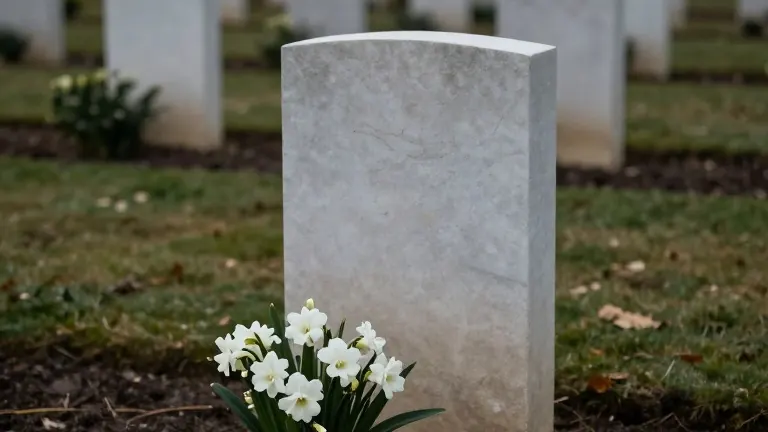
Standing beside the grave, Jarden noted that she may be the first family member to visit since his wife did so shortly after his death. She placed a white viola near the headstone and left a stone from Hokitika, painted by her 95-year-old mother. The gesture created a tangible link across the more than one century separating their lives.