Kendall County apples fueled 19th-century economy
Local orchards produced high-yield fruit that powered cider factories and vinegar businesses before shifting to hobbyist status.
By Rebecca Foster ·
John Chapman, a Massachusetts-born settler who became known as Johnny Appleseed, planted thousands of apple trees across Ohio, Indiana, and western Pennsylvania around 1800. He sowed seeds in frontier areas to provide root stock for pioneer orchards, a practice that helped establish the fruit industry in the Midwest. Some of these early plantations may have influenced the agricultural development of Kendall County.
Apples served as a primary cash crop in Kendall County during the 1800s because they were easy to grow and provided a safe source of hydration. Before the widespread adoption of germ theory, water supplies were often polluted, making fermented or sweet cider a preferred drink for both adults and children. The durability of cider also allowed it to be transported more easily than raw fruit, creating a reliable revenue stream for local farmers.
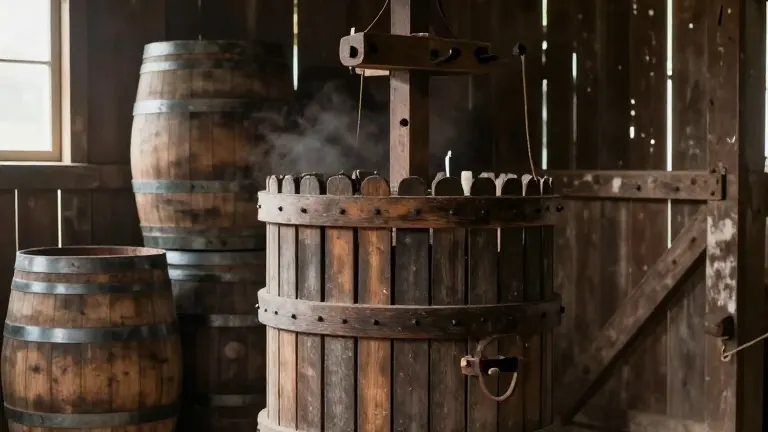
Thomas D. Wayne expanded his operations in Kendall County by constructing an engine house for his cider factory. According to a report in the Kendall County Record on August 17, 1876, Wayne purchased a new press with the latest design features. This equipment allowed him to produce cider on an extensive scale, demonstrating the industrial shift in local apple processing.
Ellis Minkler, a pioneer nurseryman for whom Minkler Road is named, developed a specific apple variety known as the Minkler Apple. The Kendall County Record noted on September 4, 1889, that Minkler distributed apples weighing one pound each and measuring 14 inches in circumference. S.B. English extracted 252 gallons of cider from just 50 bushels of these fruits in the fall of 1891, indicating a high yield for production.
Much of the pressed cider in the late 1800s was converted into vinegar, a key ingredient for preserving other food products. The Yorkville Squire Dingee Pickle Factory utilized large quantities of this vinegar during its operation. D.H. Haight, a businessman in Oswego, also established a vinegar-making facility in the basement of his store. The Kendall County Record reported on November 11, 1891, that Henry Case was temporarily flattened by a rolling barrel of cider while navigating cellar steps, a common hazard in such operations.
The transport of apple loads through town often led to chaotic scenes involving local children. In the fall of 1889, the Record's Oswego correspondent described boys swarming upon wagon loads to fill their pockets and toss fruit at one another. In one incident, Charles Stiefbold was trotting with a load when boys jumped on it and released the end board, scattering apples along a street for the length of a block.
Today, most surviving old local orchards are untended and produce few apples commercially. The shift toward smaller farm-to-table operations has created a modest comeback for local fruit production. However, pressing cider and making apple butter is now largely a hobby rather than a primary business or necessity for home consumption.
More Business · Consumer Watch · Report a business · Got a Story?