House Democrat Promises Move to End Canada Tariffs
Maryland Rep. Jamie Raskin says the new Democratic Congress will target trade barriers within the first 100 days, despite Trump retaining veto power.
By Matthew Qureshi ·
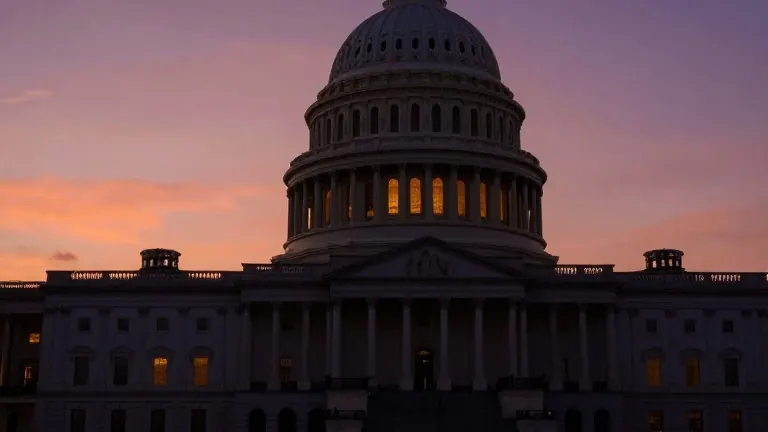
Maryland Rep. Jamie Raskin stated on Wednesday that Democrats will prioritize ending U.S. tariffs on Canada after winning control of both chambers of Congress in Tuesday's midterm elections.
Raskin, the ranking Democrat on the House judiciary committee, spoke to CBC News on Capitol Hill regarding the party's immediate legislative goals. He said the group wants to establish free and fair trade with Canada similar to other global partners. "That's one of the reasons we won Congress back, because we're going to put an end to these tariffs," Raskin said. He noted that the Constitution grants Congress control over taxes and commerce, arguing the new majority will clarify that 50 percent tariffs on democratic allies were not imposed by the legislative branch.
The victory gave Democrats command of the House of Representatives and the Senate. Raskin, who secured a sixth term in office, is expected to chair the judiciary committee. He aims to see movement on Canadian trade relations within the first 100 days of the new session. He said Democrats want to signal to allies, specifically Canada, that democratic forces prevailed and that Congress will move quickly to restore normal economic ties.
In Ottawa, Trade Minister Dominic LeBlanc said the federal government's short-term strategy remains unchanged. He declined to over-interpret the American election results, stating it is not particularly constructive for Canadians to analyze a foreign country's vote. He emphasized that negotiations continue with President Trump and his cabinet, who remain in office. LeBlanc described the eventual actions of the new Congress as an interesting discussion but noted it will not alter Ottawa's work in the coming weeks.
Canada is currently pursuing a trade agreement to lower barriers on autos, steel, aluminum, and softwood. Prime Minister Mark Carney said on Tuesday that the White House has softened its stance on certain Canadian red lines, including language requirements and the freedom to trade with other nations. Carney remarked, "They're asking less and they're offering more." He and Trump are scheduled to meet in China later this month, although autos remain a potential sticking point, as they were when previous talks collapsed in August.
President Trump retains his veto power and executive authority until the new lawmakers are sworn in in January. After the election results, he posted an image of a red hat with the word "VETO" on it. He told Politico, "I don't want to be just sitting there for two years vetoing everything."
Political leaders in Canada reacted to the shift in power. Conservative Leader Pierre Poilievre urged Carney to use the moment to secure a tariff-free deal, noting that Americans dislike the taxes. NDP Leader Avi Lewis said it is a good time to build relationships for a lasting agreement, while acknowledging some Democrats have supported or stayed silent on the tariffs. Ontario Premier Doug Ford said he was doing cartwheels down the street as results came in, adding that the war is not over.
Kirsten Hillman, Canada's former ambassador to the U.S., cautioned against sudden shifts if current talks are productive. Former Conservative cabinet minister James Moore posted on X that Carney should not accept a deal with a departing president, warning it would put Canada at an economic disadvantage.
More Politics · World news · Report a business · Got a Story?