CBP Shifts 150 Agents to Florida Maritime Patrols After Southwest Border Reduction
Commissioner Rodney Scott details how freed-up manpower from the land border is now driving a 67% increase in drug seizures in the state's waters.
By Aiko Brooks ·
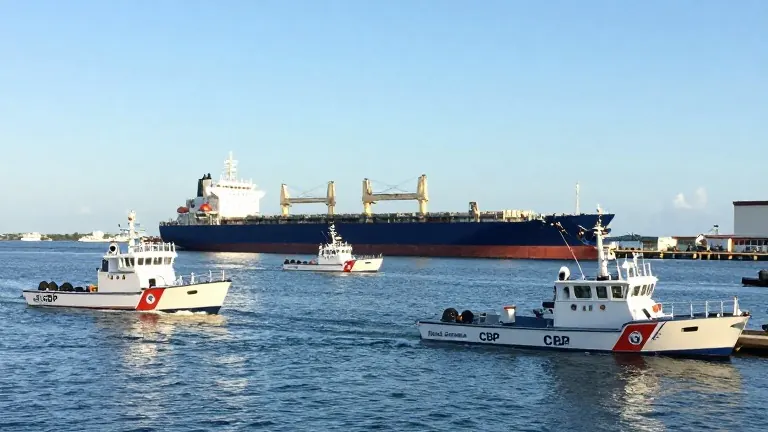
U.S. Customs and Border Protection Commissioner Rodney Scott stated that the agency has redeployed 150 border patrol agents to Florida waters, a move made possible by reduced traffic along the southwest border. Scott presented this resource shift on Thursday morning at Port Miami, alongside Border Czar Tom Homan, to demonstrate the expanded maritime security operations currently active in the region.
The administration views Florida as a border state, and the reallocation of personnel reflects a strategic pivot from land to sea. Scott explained that a 12-mile pilot section in San Diego proved the concept, allowing the agency to free up 150 agents every 24 hours. Those officers are now patrolling the waters off South Florida, supported by an increased number of aircraft and boats.
CBP officials attribute the surge in interdictions to this added capacity rather than a simple rise in smuggling activity. In fiscal year 2026, federal law enforcement agencies have seized one million pounds of narcotics. Scott noted that CBP has seized 67 percent more drugs in fiscal year 2026 than in fiscal year 2024, a figure he linked directly to more flight hours and enhanced cooperation with partner agencies.
Local results show a sharp increase in enforcement output in the Miami sector. CBP agents in Miami seized more than 17,000 pounds of narcotics in the current fiscal year, compared to just 7,000 pounds in the prior period. The department described this growth as a result of more interdictions and improved coordination, not merely an increase in the volume of drugs entering the country.
The agency faces evolving threats from cartels that utilize advanced technology, including drones, to move contraband. Some maritime encounters have resulted in gunfire, prompting the department to showcase the dangers of these operations during the Port Miami demonstration. Homan, who has visited Miami multiple times in recent months, asked local commanders to specify the resources needed to sustain these operations and ensure continued impact on local communities.