Bonfire Night law and 1832 Reform Act moved to Kew archives
Four million parliamentary documents, including the 1605 Thanksgiving Act, are now free for public viewing after a five-year transfer from Westminster.
By Matthew Qureshi ·
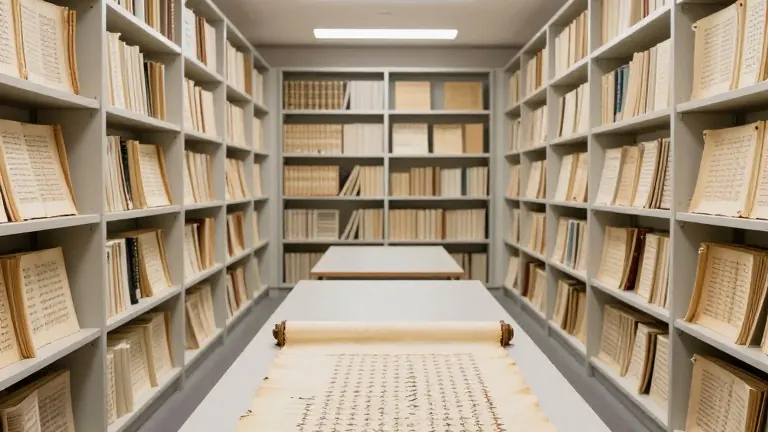
The public can now access the original law establishing Bonfire Night commemorations without a fee. The document, known as the Thanksgiving Act of 1605, is part of a massive transfer of parliamentary records to the National Archives in Kew, south-west London. The move concluded after five years of logistical work.
The act was written in calligraphy on a single sheet of vellum following Guy Fawkes’s failed attempt to kill King James I and members of parliament. It mandated church services every 5 November. Dr Graham Moore, an early modern parliament specialist at the National Archives, noted that such legal documents often began with ornate explanations before listing their specific provisions.
The transfer added 16.5 linear kilometers of material to the existing collection in Kew, bringing the total to 174.5 kilometers. Previously, these records occupied the Victoria Tower at the Palace of Westminster. The documents have been fully catalogued and assigned individual registration barcodes. This allows members of the public to order them for viewing in a facility designed for better long-term preservation and accessibility.
Among the moved items is a suffragette banner brought into the Commons Ladies’ Gallery on 28 October 1908. Protesters dropped the banner into the chamber and chained themselves to the iron grille. The grille was eventually removed with the two women still attached. Other objects include a gravestone fragment, a sword, and a uniform.
The largest item is the 1821 Land Tax Commissioners Act. This document named 65,000 commissioners for revenue collection and is written across 757 vellum membranes. It stretches 348 meters, a length exceeding three football fields, making it the longest act in the archives. The collection also contains the Great Reform Act of 1832, which Dr Joe Cozens, a specialist in 19th-century records, described as a key step toward modern democracy.
The National Archives now manages 20 million records, with one third kept in deep storage in Cheshire. Chief executive Saul Nassé stated that Westminster was not designed for modern preservation requirements. The institution now holds records from the judiciary, government, and parliament, aiming to provide wider public access to these historical materials.
More Business · World news · Consumer Watch · Report a business · Got a Story?