Beijing Showrooms: Chinese auto sales slump 21.7% as dealers cut costs
Weak domestic demand and shrinking profits are driving Chinese manufacturers to prioritize overseas markets over local sales.
By Rebecca Foster ·
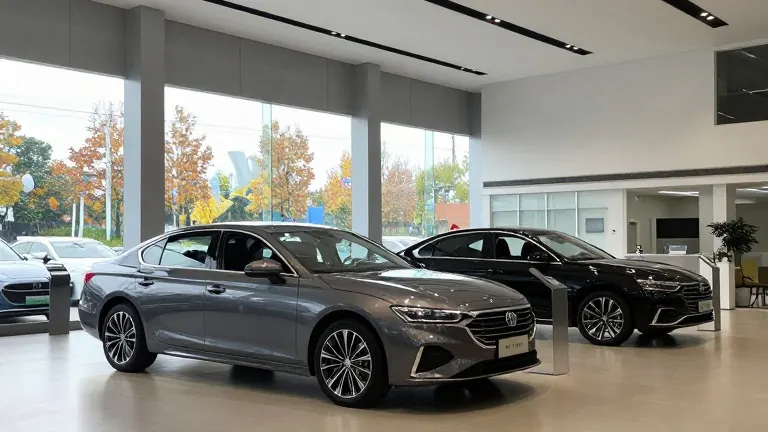
Chinese carmakers are accelerating their push into foreign markets as domestic sales slump and profit margins compress. The shift is visible in Beijing, where dealerships that once thrived on steady traffic now face empty lots and reduced hours. Li Ke, a salesman at a dealership complex on the city outskirts, reported that weekly transactions have dropped to two or three deals, a sharp decline from previous years when staff signed contracts daily.
Li described the current period as the slowest in his 26 years of experience, noting that the traditional peak selling season from September through October has failed to generate expected volume. He attributed the slowdown to a cautious consumer base that is weighing practicality and long-term value over immediate desire. Buyers are delaying replacements for their existing vehicles as they monitor their finances closely.
The national data supports the local observations. The China Passenger Car Association reported that passenger car retail sales reached 13.33 million units through September, a 21.7% decrease from the same period in the previous year. The association projects that total retail sales for 2026 will fall by 22% to 18.5 million vehicles. This figure would place the year below the levels recorded in 2020, the first year of the pandemic.
Electric vehicles, which had previously sustained growth, are also seeing a decline. Sales of new-energy vehicles dropped 12.8% from January through September according to the association. The slowdown follows a period of intense price competition that has squeezed manufacturer profits. Auto manufacturing profits for the first nine months of 2026 shrank by 22.8% compared to the same period in 2025.
Government policy has also influenced the market. Authorities have scaled back incentives, including cash-for-clunkers subsidies and tax breaks for electric vehicle purchases. These changes, combined with an unstable job market and falling property prices, have weakened consumer confidence. The China Passenger Car Association noted that domestic demand is softening across all segments.
Dealers are adjusting their operations to survive the tighter financial environment. Li moved his business from a high-traffic streetside location to a space with less foot traffic but significantly lower rent. He stated that deepening discounts offer little benefit when buyers are unwilling to commit. The primary obstacle remains the prevailing attitude toward large purchases, with Chinese buyers preferring to wait for better conditions.
The national industrial data presents a mixed picture. While overall industrial profits rose 15.5% for the first nine months of the year, the auto sector faced specific headwinds. September showed signs of weakness compared to the previous eight months. The pressure on domestic sales is reinforcing the strategic focus of Chinese manufacturers on exporting their vehicles to international markets.
More Business · National news · Consumer Watch · Report a business · Got a Story?