Alaska Senate race: Salmon dispute dominates campaign
Trawlers' bycatch of king salmon has become the central issue in the state's tight election, drawing sharp attacks from both candidates.
By Aiko Brooks ·
The U.S. Senate race in Alaska has turned into a high-stakes debate over the fate of local salmon populations. The conflict pits the state's indigenous subsistence fishers against a massive offshore pollock industry that employs industrial trawlers. This dispute has emerged as the primary driver of voter sentiment in a state that could determine the majority in the U.S. Senate.
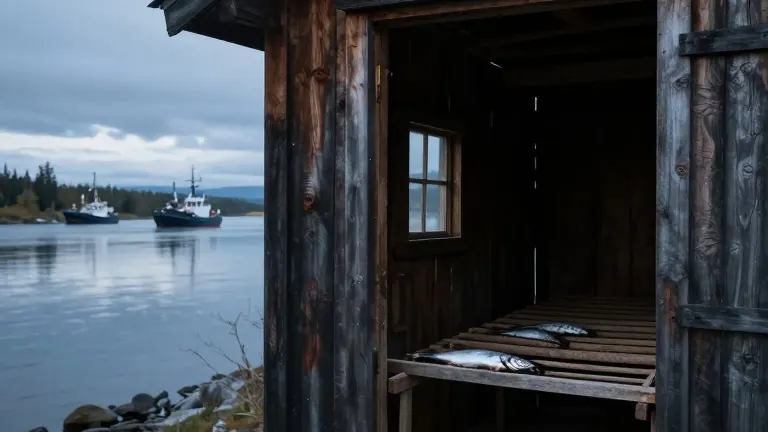
In villages along the Kuskokwim River, the decline in salmon returns has created a tangible economic and cultural crisis. Evon Waska, a resident of a remote community, describes his empty drying racks where fish should be preserved for the winter. He blames offshore trawlers, which use sock-shaped nets a quarter mile long to harvest pollock. These operations frequently catch king salmon as bycatch, a fish that is often discarded despite being a dietary staple for local families.
The pollock industry, valued at approximately $1 billion, is a major economic force in the region. Much of the operation is based in Seattle, and the fish is processed into imitation crab and other products. The industry argues that the impact of bycatch on overall salmon runs is minimal. Heather Mann, who leads a trawlers association, stated that eliminating pollock fishing would have a small effect on restoring salmon populations, according to scientific data.
Political candidates have seized on this tension to differentiate themselves. Republican Senator Dan Sullivan, a long-time ally of the pollock industry, has promoted a new bill designed to reduce bycatch. Sullivan described the legislation as the most comprehensive effort to lower bycatch levels and protect seafloor habitat. However, his Democratic challenger, Mary Peltola, calls the bill a late-stage political maneuver.
Peltola, an indigenous Alaskan from the Kuskokwim, has proposed banning factory trawlers, the largest vessels in the pollock fleet. She accused Sullivan of accepting over $300,000 from trawlers and offering a weak solution just before the election. Her campaign ads criticize Sullivan for taking large sums from out-of-state corporate trawlers, while Sullivan's ads urge voters to thank him for championing fisheries legislation.
The physical impact of the decline is visible in communities like Kwethluk, where subsistence fishing is the primary occupation. Mary Nikolai, the tribal president, noted that many local smokehouses have remained unused all summer. She described the situation as a slow trend that is effectively closing out the local workforce. The lack of fish has altered the daily rhythm of life in these remote areas.
Trawlers report catching 40,000 Alaska salmon so far this year, a figure they argue is a small fraction of their total harvest. Despite this, the issue has saturated the local media and campaign ads. The race has transformed a technical debate about fish management into a cultural referendum, with voters weighing the economic benefits of the pollock fleet against the traditional livelihoods of western Alaska.
As the election approaches, the outcome in Alaska will likely hinge on how voters perceive the balance between these two economic interests. The dispute has moved beyond local concerns to become a national question about resource management and political representation. Both candidates are using the salmon crisis to define their stance on the state's future, ensuring the issue remains central to the campaign.